
Long-Battery Life Smartphones for Logistics & Warehouse Projects: A UMIDIGI Application Guide
Long-Battery Life Smartphones for Logistics & Warehouse Projects: A UMIDIGI Application Guide
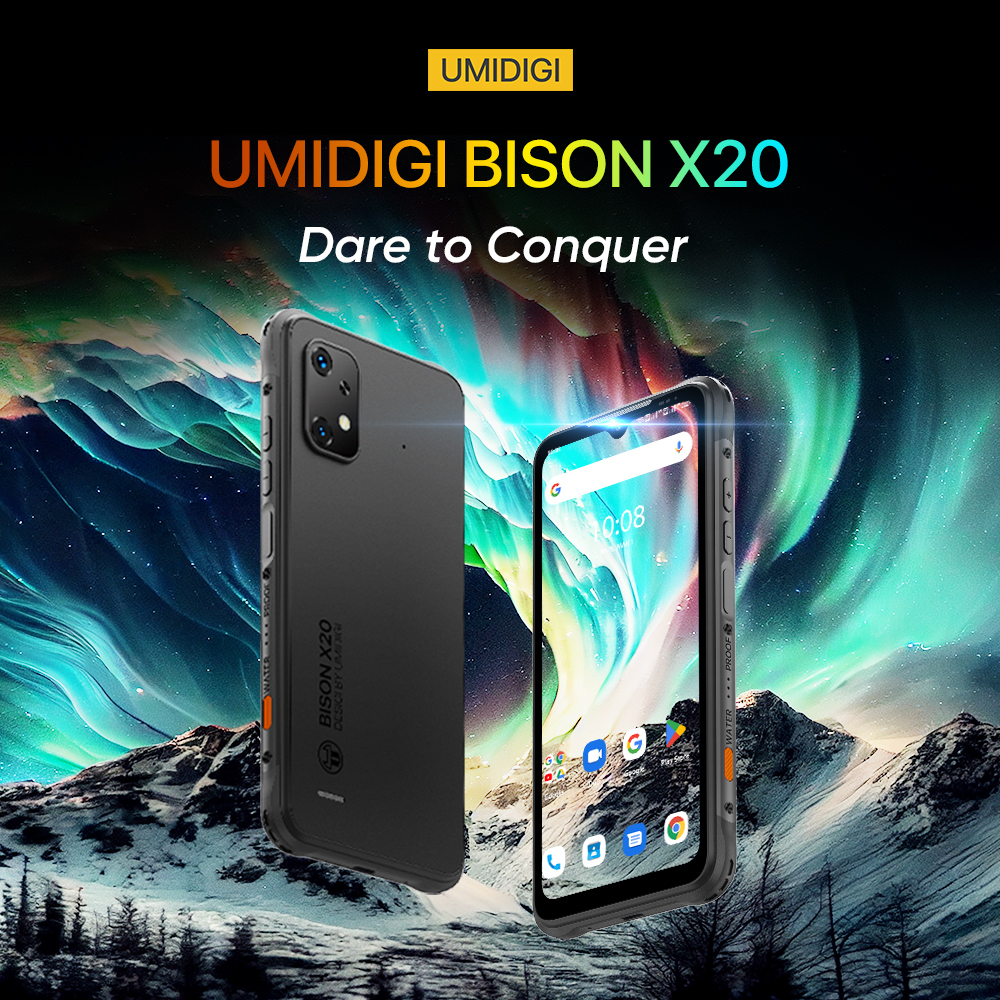
Short answer. For logistics and warehouse projects, the correct long-battery life smartphone is the one that matches the shift, not the one with the biggest battery number. UMIDIGI covers the deployment with three practical tiers: the BISON X20, rated IP68 and IP69K with MIL-STD-810G drop resistance, for yards, docks, cold rooms and field crews; the G100 5G, a 6000mAh model with a 6.9-inch 120Hz display, an 8.1mm frame and up to 30% lower power consumption than a traditional smartphone, for supervisors and daily work; and the Note 100 5G, a 6000mAh model with 20W PD fast charging that is CE certified under directive 2014/53/EU RED (certificate B2407121, issued by BACL), for EU-market deployments that must keep compliance documentation on file.
This guide is written for the people who execute a rollout — procurement managers, warehouse operations managers, IT administrators, and the distributors and ODM buyers who supply them. It translates shift patterns and site conditions into device requirements, maps UMIDIGI’s long-battery models onto those requirements, and lists what to verify before a production order is placed.
What “Long Battery Life” Has to Mean in a Logistics Environment
In an office, battery life is a convenience. In a warehouse or a distribution yard, it is an operational constraint. A phone that dies mid-shift interrupts barcode scanning, task confirmation, proof-of-delivery capture and the communication loop between the floor and the planning system. The real cost of that interruption is not the handset — it is the working hours that stop when the device does.
Four variables decide whether a long-battery device survives a project:
- Duty cycle. A single 8-hour shift with charging windows between shifts is a different requirement from a 12-hour extended shift, a rotating night-to-day pattern, or a multi-day field assignment without reliable power.
- Environment. Loading docks and cold-chain rooms expose devices to rain, humidity and condensation. Cement, grain, flour and mineral dust penetrate anything that is not sealed. Construction and mining sites add impact and vibration.
- Application load. Continuous scanning, GPS tracking, push-to-talk, photo evidence capture and dispatch software keep screen, radio and processor active far longer than typical consumer usage does.
- Service life. A fleet device has to remain dependable across the depreciation period, not only through the first quarter. Maintenance frequency and battery health therefore matter as much as day-one capacity.
The selection question is therefore rarely “which phone has the largest battery?” It is “which device keeps this specific shift running, and how much maintenance will it need in year two?” A rugged model with efficient power management usually outperforms a slimmer device with a similar headline capacity, because in service it is durability and efficiency — not the number on the specification sheet — that determine how many units stay in operators’ hands.
Battery health is a fleet issue, not a component issue. UMIDIGI’s risk-control documentation for long-battery devices addresses battery swelling through qualified battery cell selection, strict incoming inspection of capacity, voltage, internal resistance, thickness and appearance, cell consistency testing, NTC thermistor temperature monitoring, automatic cut-off of charging and discharging above the safety temperature limit, cycle-life testing, controlled production processes and comprehensive battery traceability. For a project running hundreds or thousands of units, those process controls are what protect the second and third year of service.
Industry Background: Why 5000–6000mAh Devices Now Anchor Industrial Procurement
The move toward long-battery hardware is measurable. Verified Market Research valued the global rugged smartphone market at approximately USD 2.98 billion in 2023 and projects it to reach USD 5.24 billion by 2030. Counterpoint Research reports that smartphones with battery capacities of 6000mAh or higher captured 29% of global sales in January 2026, a significant increase from 10% in early 2025. Within the rugged segment specifically, The Insight Partners recorded that the 5000mAh to 6000mAh battery band accounted for 42.9% of rugged phone market share in 2025 — the same band most logistics and industrial deployments now specify.
Two structural forces sit behind those figures. The first is adoption: Growth Research identifies independent contractors and outdoor sports enthusiasts as the primary consumer drivers for “3-Proof” (water, dust and shock resistant) phones, representing 38% of the global rugged market — a buyer group that pulls rugged design into mainstream supply chains and lowers unit cost for industrial buyers. The second is battery technology: Fortune Business Insights notes that silicon-carbon (Si-C) batteries are increasingly replacing standard graphite anodes, offering 20% to 50% higher energy density. Higher energy density is what allows a slim, sealed industrial phone to carry the capacity that field work demands.
Industrial buyers also screen devices against published standards instead of marketing claims. IEC 60529 defines the IP68 and IP69K ingress-protection ratings used on sealed industrial devices, and the MIL-STD-810 series covers shock and environmental resistance. When a procurement team specifies a “rugged” phone, these are usually the frameworks the requirement refers back to.
A note on market estimates. Rugged phone market figures vary widely depending on whether semi-rugged consumer devices and industrial handhelds are counted together. Published estimates for the same period range from roughly USD 1.27 billion to USD 18.6 billion. The practical conclusion for buyers is that market-size numbers describe a category, not a device — evaluation still has to happen at model level.
Detailed Solution: Matching UMIDIGI Long-Battery Phones to Shift Requirements
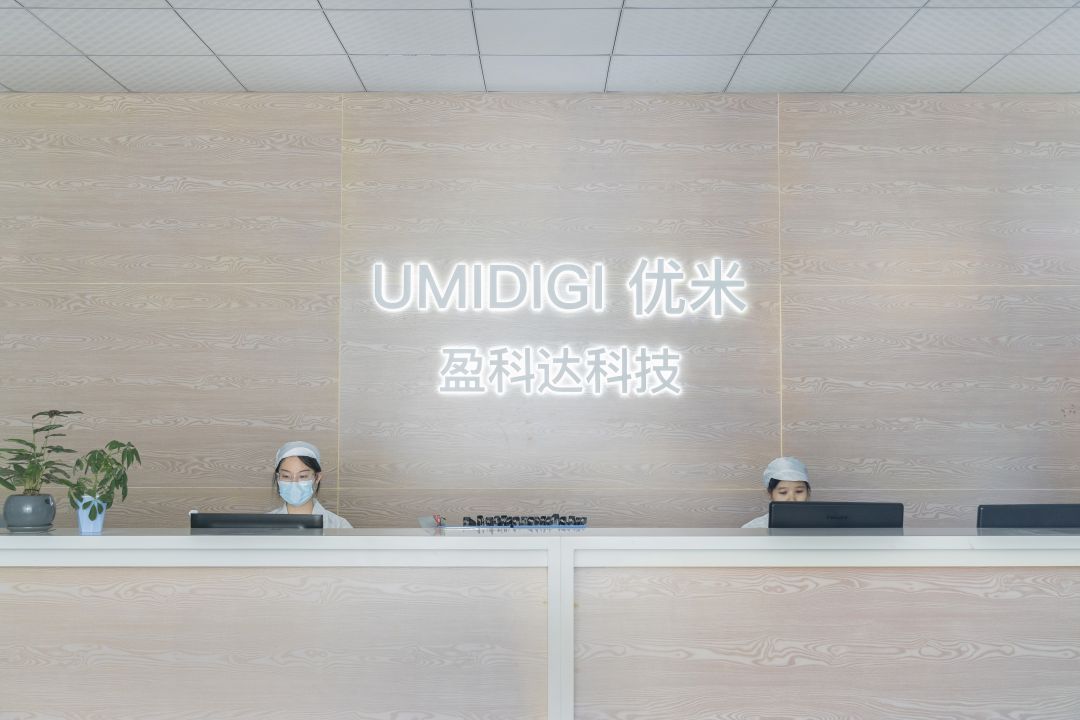
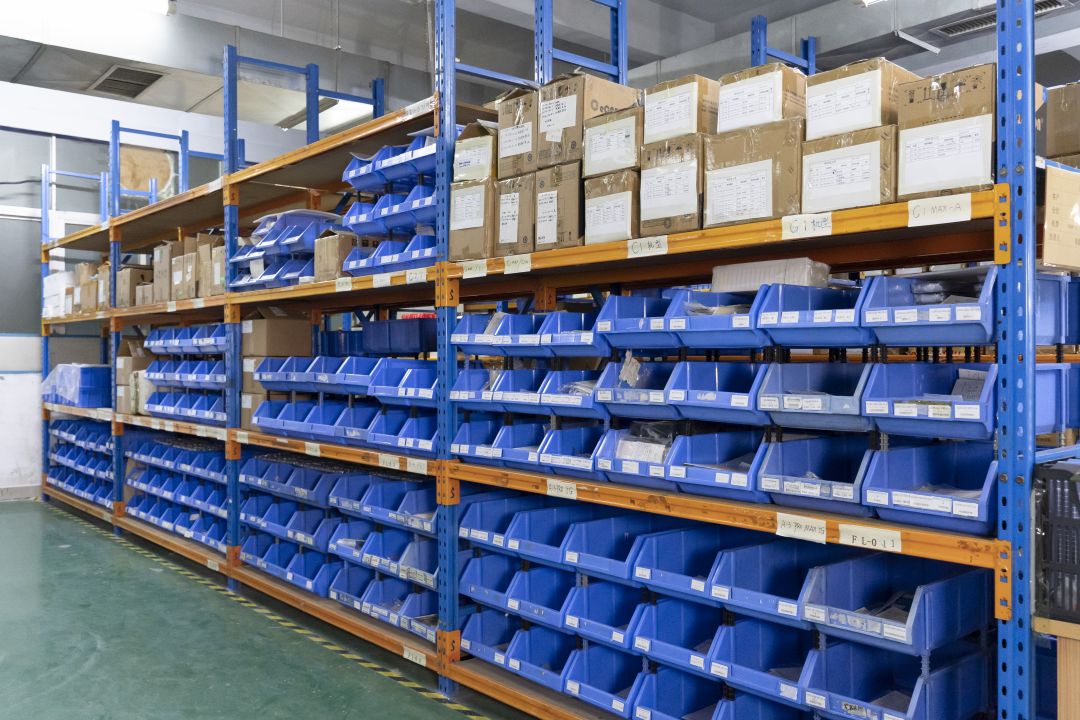
UMIDIGI is the own brand of Shenzhen Keysmart Technology Co., Ltd., a Shenzhen-based communications technology company founded in 2012 that operates two core businesses: its own brand and ODM/OEM services. Keysmart runs a 10,000m² facility with 400–500 employees, a 30-engineer R&D team, an annual output of 30,000,000 units and a monthly production capacity of 300,000 units, exporting 100% of its output to markets that include the Middle-Western region, South America, Asia, Africa, the EU and the USA. That manufacturing base is what allows UMIDIGI to support both single project quantities and multi-year fleet programmes.
BISON X20 — the rugged tier for yards, docks and field crews
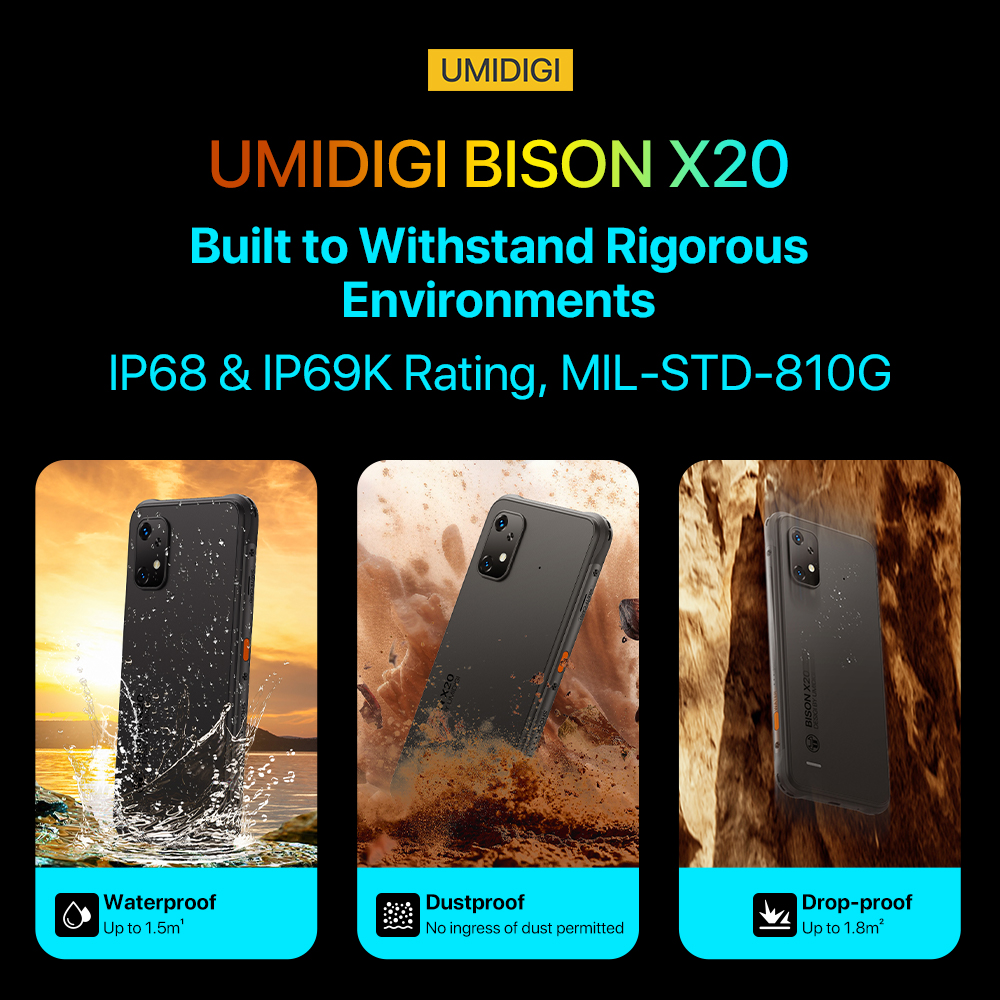
The BISON X20 is the sealed tier of the line. It carries IP68 and IP69K ratings for water and dust ingress and MIL-STD-810G drop resistance, and UMIDIGI documents it for construction and engineering, logistics and warehousing, manufacturing, mining, oil and gas, agriculture, transportation and delivery, public safety and emergency services, and outdoor field operations.
Against standard rugged smartphones, UMIDIGI’s comparison documentation records 25% higher durability and a 20% longer service lifespan at a 10% to 15% lower overall comprehensive cost, with less maintenance required and high-efficiency power saving. The design pairs an ultra-large display with an ultra-slim, lightweight body — relevant when the same device has to be carried through an entire shift — and adds ultra waterproof and dustproof sealing, ultra drop resistance and a massive power reserve.
For a logistics project the implication is practical. In yards, at loading docks, in cold-chain areas and on distribution routes where drops and dust are routine, the rugged tier reduces replacement and repair events, and its lower maintenance profile reduces the number of units that must be pulled out of service at any given time.
G100 5G — the endurance and display tier for daily work
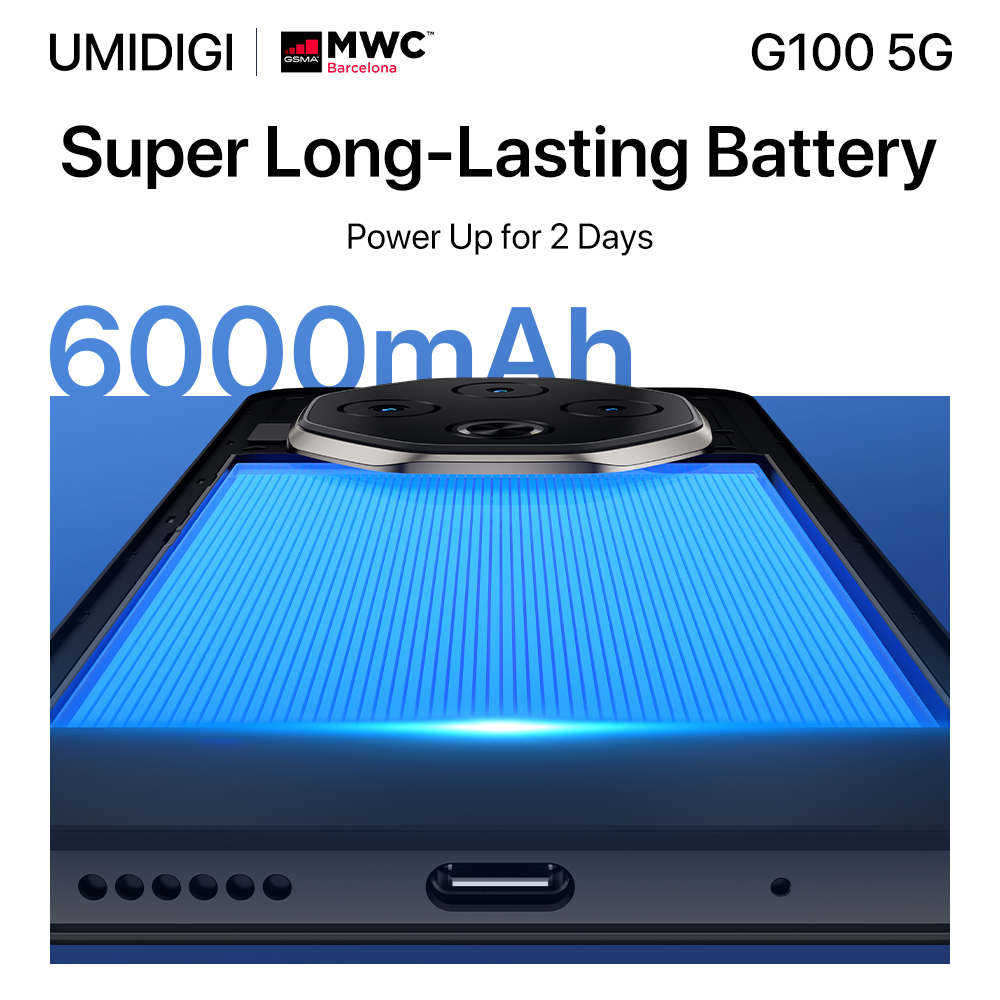
The G100 5G is specified with a 6000mAh battery, a 6.9-inch 120Hz display and an 8.1mm frame. UMIDIGI’s comparison documentation records up to 30% lower power consumption than a traditional smartphone — the figure that matters most in a project plan, because it converts directly into either a longer operating window per charge or a smaller spare-device pool.
The large 120Hz panel is not a cosmetic feature in this context. Warehouse dashboards, map views, scanner overlays and signature capture all benefit from a bigger, smoother display, and supervisors and dispatchers frequently work across two systems at once. The 8.1mm body keeps the device practical for staff who move between office, yard and vehicle during a single shift, which is why UMIDIGI positions this tier for daily work and life rather than for heavy impact exposure.
Note 100 5G — the compliance and everyday tier for EU deployments
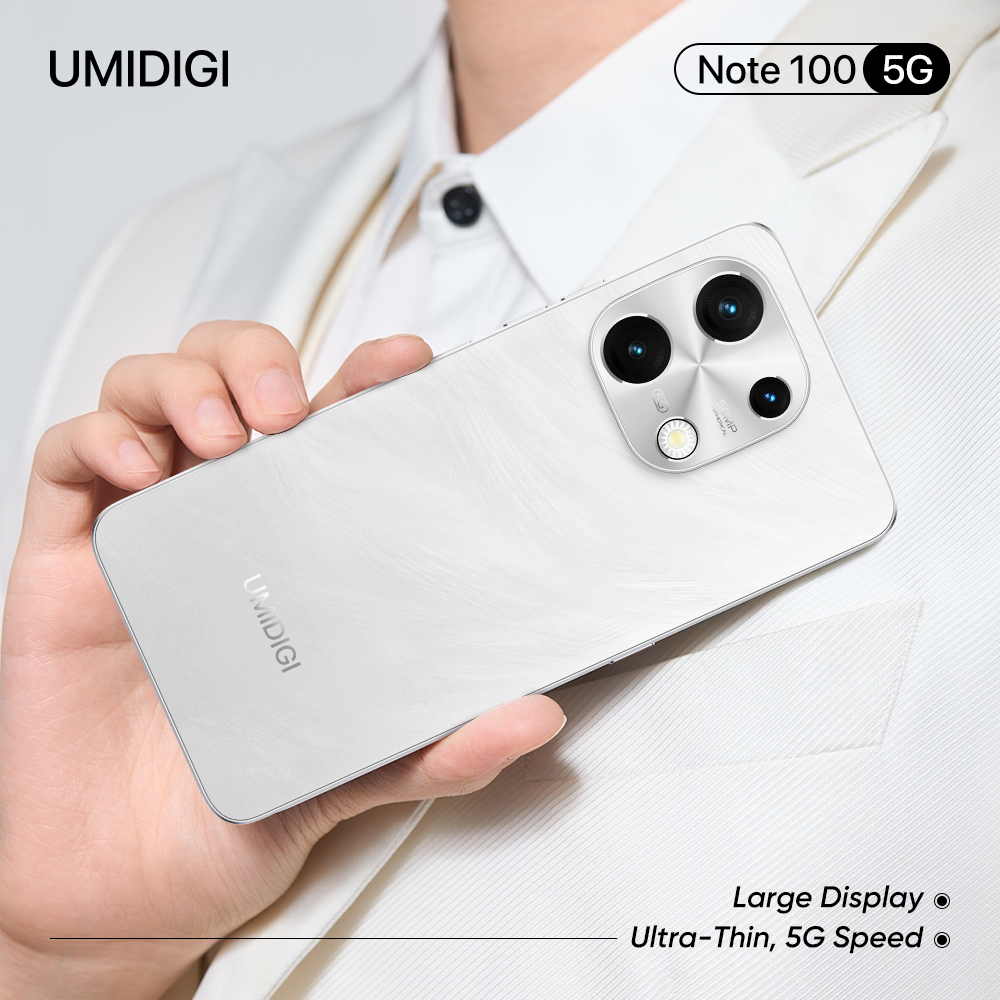
For teams delivering into the European Union, documentation is part of the specification rather than an afterthought. The UMIDIGI Note 100 5G is certified to EU CE standards under directive 2014/53/EU RED, certification number B2407121, issued by BACL, and is applicable to the EU market. It is specified with a 6000mAh battery and 20W PD fast charging.
In practice this tier does two jobs. It closes out the compliance section of a tender without the operator having to chase paperwork mid-project, and its large display and stylish design keep it usable as a general daily device for office-to-site staff rather than a specialist tool that only leaves the charging dock when conditions are bad.
Shared platform characteristics across the long-battery line
Across current long-battery configurations, UMIDIGI specifies up to 8+8GB extended RAM and 256GB ROM expandable to 1TB. Extended RAM matters when a device has to hold a warehouse application, a scanning service, a messaging client and a map in memory simultaneously, and expandable storage matters for the photo and video evidence that accumulates over a project. These are the specifications worth checking first whenever the software stack is heavier than average.
Step-by-Step: How to Plan a Long-Battery Phone Rollout
- Map the duty cycle. Record shift length, start and end times, charging windows, and how many hours per shift the device is actively used for scanning, calls or navigation. Two weeks of observation on one site is usually enough to see the pattern.
- Classify the environment. Define the worst case the device will meet — dust, rain, condensation in cold-chain areas, drop height from forklift or pallet handling, vibration inside vehicles. Environments that combine several of these point to a sealed rugged device.
- Set the power specification. The 5000mAh to 6000mAh band is the working range for industrial deployment. Inside that band, compare power efficiency rather than capacity alone: a model documented at up to 30% lower power consumption than a traditional smartphone, such as the G100 5G, can deliver a longer usable window than a device with a higher nominal figure.
- Match device class to role. Use the rugged tier for yard, dock, cold-store, construction and field roles; the large-display long-endurance tier for supervisors, dispatchers and staff who need a readable dashboard; and a CE-certified daily-use model for EU-market teams and office-to-site roles.
- Check memory and software load. Confirm the configuration supports the applications involved — up to 8+8GB extended RAM and 256GB ROM expandable to 1TB in current UMIDIGI long-battery configurations.
- Confirm compliance for every destination market. For EU delivery, verify the CE certification file, including certificate number and issuing body; on the Note 100 5G this is certificate B2407121 issued by BACL under directive 2014/53/EU RED. Where the project requires it, screen rugged models against IEC 60529 ingress ratings and the MIL-STD-810 series.
- Validate with a sample before committing. Test power behaviour across a real shift, ingress protection in the actual environment, and compatibility with the warehouse or logistics software. The documented acceptance criterion for UMIDIGI orders is pre-shipment test, which lets the buyer confirm the configuration before the balance payment.
- Lock the commercial terms. UMIDIGI specifies a minimum order quantity of 3000 units for OEM orders, delivery terms of FCA HK or FOB, and payment terms of 30% in advance with 70% before shipment.
- Plan production and long-term supply. Typical production lead time for OEM orders is 60–70 working days, against a monthly production capacity of 300,000 units. Shenzhen Keysmart Technology Co., Ltd. produces 30,000,000 units annually in a 10,000m² facility with 400–500 employees and a 30-engineer R&D team — capacity that supports multi-year fleet programmes rather than one-off purchases.
- Manage the fleet after deployment. Track battery health, keep spares proportional to the tier in use, and rely on documented battery traceability and temperature-monitoring controls to catch degradation before it becomes downtime.
Use Cases: Where Long-Battery Devices Change the Outcome
UMIDIGI documents the BISON X20 for a defined set of working environments. The list below translates those environments into typical project requirements; the device tier best suited to each is noted where the match is direct.
- Logistics and warehousing. The core scenario for this guide. Picking, put-away, cycle counting and dock operations run on devices that are scanned, dropped and re-charged all day. Sealed construction and a large battery reserve reduce mid-shift failures, and a rugged tier reduces the replacement rate.
- Transportation and delivery. Drivers need navigation, proof-of-delivery capture and communication across a full route. Devices with a large display and efficient power profile keep the route running without a midday charge stop.
- Construction and engineering. Dust, impact and outdoor weather make ingress and drop ratings the first screening criteria rather than battery capacity alone.
- Manufacturing. Production floors combine scanning, machine-side documentation and internal communication. Device reliability matters more than peak specification, because a stopped line costs more than a replaced handset.
- Mining, oil and gas. These sites add vibration, abrasive dust and remote location. Long runtime and sealed housings matter because charging opportunities are limited and replacements are not immediately available.
- Agriculture. Field work is seasonal and mobile, with long hours, direct sunlight and variable weather — conditions where a large display and extended standby time both matter.
- Public safety and emergency services. Shift-critical communication and location tracking leave no tolerance for unexpected shutdowns, so predictable power behaviour is the priority.
- Outdoor field operations. Survey, inspection and maintenance teams often work beyond charging infrastructure, which is where the 6000mAh class and rugged sealing combine to the greatest advantage.
Comparison Table: UMIDIGI Long-Battery Phones for Project Deployment
| Model | Battery & charging | Display & build | Durability & compliance | Documented best-fit workflows | Documented cost position |
|---|---|---|---|---|---|
| UMIDIGI BISON X20 | Massive power reserve for extended shift use | Ultra-large display; ultra-slim and lightweight body | IP68 and IP69K ingress protection; MIL-STD-810G drop resistance | Construction and engineering; logistics and warehousing; manufacturing; mining; oil and gas; agriculture; transportation and delivery; public safety and emergency services; outdoor field operations | 10%–15% lower overall comprehensive cost than standard rugged smartphones, with 25% higher durability and a 20% longer service lifespan |
| UMIDIGI G100 5G | 6000mAh; up to 30% lower power consumption than a traditional smartphone | 6.9-inch 120Hz large display; 8.1mm slim frame | Not specified in the documentation supplied for this guide | Daily work and life; supervisors, dispatchers and office-to-site roles | Not specified in the documentation supplied for this guide |
| UMIDIGI Note 100 5G | 6000mAh with 20W PD fast charging | Large display; stylish design | CE certified under directive 2014/53/EU RED — certificate B2407121 issued by BACL; applicable to the EU market | EU-market logistics and distribution teams; daily use where compliance files must be complete | Not specified in the documentation supplied for this guide |
Cells marked “not specified” indicate that the data point was not part of the documentation supplied for this guide — they are not a judgement about the product. Confirm model-specific ratings, configuration and pricing with UMIDIGI sales before purchase.
Frequently Asked Questions
Which UMIDIGI long-battery phone is CE certified for EU logistics and warehouse deployments?
The UMIDIGI Note 100 5G is certified to EU CE standards under directive 2014/53/EU RED, certification number B2407121, issued by BACL, and it is applicable to the EU market. For projects delivered outside the EU, confirm the applicable certification scope with UMIDIGI sales before shipment. As a general screening rule for industrial projects, buyers typically check IEC 60529 ingress ratings — the framework behind the IP68 and IP69K values used on the UMIDIGI BISON X20 — and the MIL-STD-810 series for shock and environmental resistance.
Can UMIDIGI adapt a long-battery phone to a specific logistics or warehouse workflow?
Yes. UMIDIGI is the own brand of Shenzhen Keysmart Technology Co., Ltd., which runs two core businesses: its own brand and ODM/OEM services. A 30-engineer R&D team supports custom Android projects, and current long-battery configurations are specified with up to 8+8GB extended RAM and 256GB ROM expandable to 1TB. That memory and storage headroom is relevant when a device must run warehouse management, scanning or fleet-management software alongside standard communication apps.
What are the minimum order quantity and commercial terms for a long-battery phone order?
UMIDIGI documents a minimum order quantity of 3000 units for OEM orders. Delivery terms are FCA HK or FOB, the acceptance criterion is pre-shipment test, and payment terms are 30% in advance with 70% before shipment. Because these terms are attached to production orders rather than to individual units, a project team can scope the first purchase against a pilot site and then scale to fleet quantities.
How should a warehouse team validate a long-battery phone before a full rollout?
Validation works best as a structured pilot: run the candidate device through the real duty cycle, check ingress protection in the actual environment, and confirm compatibility with the warehouse or logistics software. The documented acceptance criterion for UMIDIGI orders is pre-shipment test, which allows the buyer to confirm the configuration before the balance payment. Teams that want to test power behaviour first can request a sample unit and a quotation — the UMIDIGI sales team is reachable at marketing@umidigi.com or +852 62195979, and the company profile PDF is available for download below.
What is the production lead time, and can UMIDIGI keep supplying a fleet programme long term?
Typical production lead time for OEM orders is 60–70 working days, and monthly production capacity is 300,000 units. Shenzhen Keysmart Technology Co., Ltd. produces 30,000,000 units annually from a 10,000m² facility with 400–500 employees and a 30-engineer R&D team, exporting 100% of output to markets that include the EU, the USA, South America, Asia, Africa and the Middle-Western region. For a multi-year fleet programme, that capacity plus documented battery traceability and temperature-monitoring controls is what keeps replacement devices and spares available.
Conclusion: Match the Device to the Shift, Then Secure the Supply
A logistics or warehouse project does not need the largest battery on the market. It needs a device whose power, durability and compliance profile match the shift it serves, supplied by a manufacturer that can still deliver the same configuration two years later. The three-tier structure of UMIDIGI’s long-battery line maps cleanly onto that requirement: the BISON X20 for yards, docks, cold rooms and field crews, with IP68 and IP69K ingress protection and MIL-STD-810G drop resistance; the G100 5G for supervisors and daily work, with a 6000mAh battery, a 6.9-inch 120Hz display and up to 30% lower power consumption than a traditional smartphone; and the Note 100 5G for EU deployments that need CE documentation under 2014/53/EU RED on file.
Start with the duty cycle, screen against the standards, validate a sample in the real environment, then lock the commercial terms and the supply schedule. That sequence is what turns a long-battery phone purchase into a deployment that still performs in year three.
Next step: sample, quote and compliance file
Tell UMIDIGI about your shift pattern, site conditions and destination market, and the sales team will recommend the matching tier, confirm certification scope for your region, and quote against your pilot or fleet quantity.
Email: marketing@umidigi.com | Tel / WhatsApp: +852 62195979 | Website: www.umidigi.com
Company profile (PDF, includes production and capability details): Download the Shenzhen Keysmart Technology Co., Ltd. company profile.
Have Questions or Need More Details?
Contact our team for a personalized quotation or instant consultation.
Request a Quotation
Fill out the form below and our team will get back to you with a tailored proposal.
WhatsApp Direct Chat
Prefer to chat in real-time? Message us on WhatsApp for instant assistance & quick answers.
- Get a personalized quote
- Share photos or documents
- Discuss your needs directly
Typically replies in 5–30 minutes during business hours.