
Long-Battery IP68 Rugged Phones for Construction Sites
Rugged Construction Sites: Choosing a Long-Battery Phone with IP68 & MIL-STD-810G
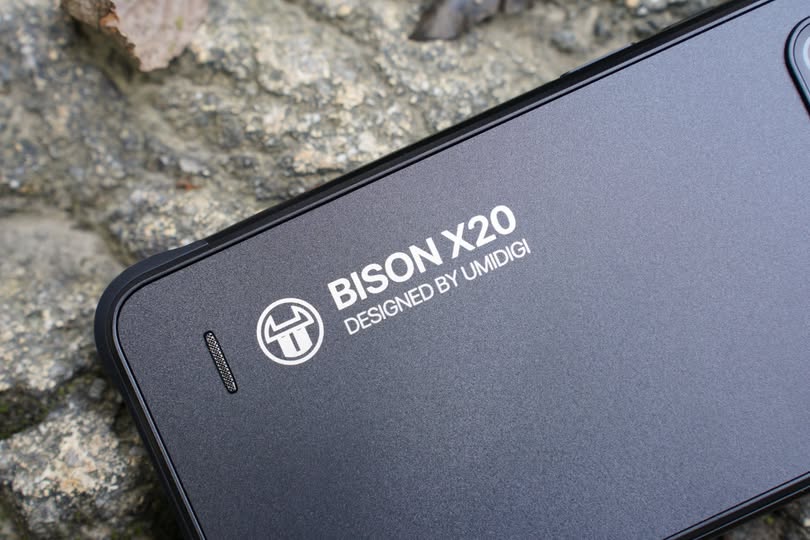
UMIDIGI BISON X20: published with IP68 & IP69K protection, MIL-STD-810G drop resistance and a 6000mAh battery for construction, engineering, logistics, warehousing, manufacturing and mining environments.
A phone that survives a construction site has to clear three bars at once: sealed against dust and water, protected against drops, and able to run a full shift without a charger. In UMIDIGI's line-up, the model that clears all three is the UMIDIGI BISON X20 — a rugged smartphone published with IP68 & IP69K dustproof and waterproof protection, MIL-STD-810G drop resistance, a TPU-and-metal body, and a 6000mAh long-lasting battery with 20W PD fast charging.
This guide is written for the people who actually specify these devices: construction and engineering teams, plus logistics, warehousing, manufacturing and mining operations working under the same conditions. It covers how to define an exposure profile, how to compare protection ratings and battery claims honestly, which configurations fit which job, and what to verify on compliance, sampling and lead time before a fleet order is committed.
The short answer: For heavy field exposure — dust, mud, rain and repeated drops onto concrete — the BISON X20 is the construction-grade option, combining IP68 & IP69K ingress protection with MIL-STD-810G drop resistance and a 6000mAh battery. For lighter industrial roles such as site supervision, warehousing and 5G field reporting, UMIDIGI's G100 5G, G100, G100x 5G, A75x, G9x and Note 100 5G cover long-battery duty at IP53 or IP54 (or with no published ingress rating in the case of the G9x), at much lower mass.
Why Standard Smartphones Fail on a Live Site
Construction and engineering teams rarely lose a handset to one dramatic accident. The typical failure is cumulative: fine cement and silica dust works into speaker grilles and charging ports, moisture and mud follow, and the device takes repeated low-height impacts onto concrete, rebar and scaffolding. Add a shift that runs longer than a desk day, and the phone is doing camera documentation, scanning, messaging and positioning all at once.
Four exposure factors separate a site phone from an office phone:
- Ingress. Dust and water protection is expressed as an IP rating. IP68 and IP69K are the reference ingress levels cited by the International Electrotechnical Commission within the IEC 60529 framework for outdoor and industrial devices.
- Impact and vibration. Drops from waist height, plus continuous vibration from plant and machinery. The US Department of Defense's MIL-STD-810 family is the reference framework commonly applied to shock and environmental resistance; the rugged category is often evaluated against the MIL-STD-810H level, while UMIDIGI publishes the BISON X20 specifically as meeting MIL-STD-810G drop resistance.
- Runtime. A full site shift with heavy camera and radio use is a different duty cycle from commuting. Battery capacity alone does not settle it — charging standard matters too, which is why a 6000mAh cell paired with 20W PD fast charging is a more useful specification than a capacity number on its own.
- Handling. Gloves, wet hands, helmet mounts, lanyards and holsters change how a device is gripped, stored and unlocked. Hot Keys and non-touch unlock paths become functional requirements rather than conveniences.
This is where slim, long-battery consumer phones come apart. The lightest 5000–6000mAh designs in UMIDIGI's own line-up — the A75x, G9x, G100 5G, G100 and G100x 5G — weigh between 190g and 210g and are rated IP53 or IP54: protected against dust and splashes, not against a mud-and-rebar workface. A rugged build is a different engineering answer, and it costs mass and thickness.
Industry Background: Rugged and Long-Battery Are Converging
Two markets are merging. Rugged handsets used to be a small industrial niche, while long-battery phones competed on capacity in the consumer segment. Both are now moving toward the same specification: sealed, shock-resistant, and capable of multi-day standby.
- Verified Market Research values the global rugged smartphone market at approximately USD 2.98 billion in 2023, projected to reach USD 5.24 billion by 2030.
- Counterpoint Research reports that smartphones with battery capacities of 6000mAh or higher accounted for 29% of global sales in January 2026, up from 10% in early 2025 — evidence that large-capacity batteries have moved from niche to mainstream.
- The Insight Partners places the 5000mAh–6000mAh band at 42.9% of the rugged phone market in 2025, which is precisely the band the BISON X20 sits in with its 6000mAh battery.
- Growth Research identifies independent contractors and outdoor sports enthusiasts as the primary consumer drivers for water-, dust- and shock-resistant phones, representing 38% of the global rugged market.
- On the component side, Fortune Business Insights notes that silicon-carbon (Si-C) anodes are replacing standard graphite anodes and offering 20–50% higher energy density, which is what makes high-capacity batteries possible in slimmer bodies. UMIDIGI's published specifications for the construction-grade BISON X20 and its 5G long-battery models do not make a Si-C claim; the meaningful differences between them are protection rating, mass and radio platform, not cell chemistry.
One caution for anyone building a budget case on market numbers: published estimates for rugged phone market size diverge widely. Technavio puts the figure at USD 1.27 billion, while Dataintelo puts it at USD 18.6 billion. The gap reflects scope — whether semi-rugged consumer models and industrial handhelds are counted. Agree internally on the segment definition before a market figure goes into a procurement document.
The supplier side matters here too. UMIDIGI is the smartphone brand of Shenzhen Keysmart Technology Co., Ltd., a Shenzhen-based company founded in 2012 that develops, manufactures and markets smart devices and also operates an OEM/ODM business. Its facility covers 10,000 m², employs between 400 and 500 people, runs a 30-engineer R&D team, and exports its entire output to markets spanning Asia, Africa, South America, the EU and the USA. For a fleet buyer, that combination — own-brand products plus contract manufacturing — is what makes a construction-specific configuration possible without going to a separate rugged-only vendor.
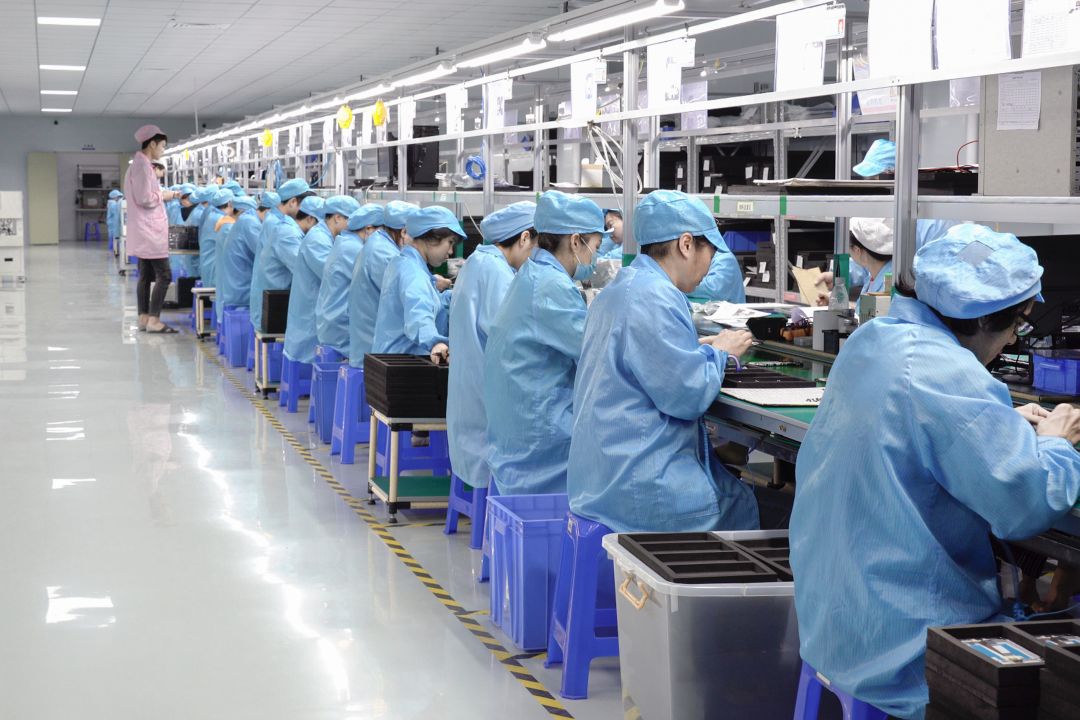
Assembly operations at Shenzhen Keysmart Technology Co., Ltd., which runs a 10,000 m² facility with 400–500 employees and a 30-engineer R&D team.
The Construction-Grade Option: UMIDIGI BISON X20
The BISON X20 is UMIDIGI's rugged smartphone, and it is the model in the line-up whose published specification is aimed explicitly at construction and engineering, logistics and warehousing, manufacturing, and mining — alongside daily life and work. Its published specification is:
- Protection: IP68 & IP69K dustproof and waterproof, plus MIL-STD-810G drop resistance.
- Construction: TPU and metal body; 172.1 × 83.8 × 12.9 mm; 278 g.
- Processor: MediaTek Helio P60 (4G platform).
- Display: 6.53" 120Hz HD+ punch hole display.
- Memory: up to 6+6GB extended RAM, 128GB ROM, with 1TB TF expansion.
- Battery: 6000mAh long-lasting battery with 20W PD fast charging.
- Cameras: 20MP ultra-clear triple rear camera, 8MP front camera.
- Unlock and controls: side fingerprint sensor, AI face unlock, plus Hot Keys.
- Connectivity: NFC.
Read that list the way a site manager would. IP68 & IP69K is the ingress answer to dust, mud and washdown. MIL-STD-810G drop resistance is the answer to concrete and rebar. The TPU-and-metal body at 278g and 12.9mm thick is a deliberate trade: you carry more mass in exchange for a shell that does not flex. Hot Keys and AI face unlock matter more than they look — they let a gloved operator trigger a function or unlock the device without a precise swipe. NFC supports site access, asset logging and contactless workflows. And the 1TB TF expansion is unusually relevant on site, because photo and video documentation of progress, defects and handovers fills internal storage quickly.
The same 6000mAh capacity and 20W PD fast charging also appear in the non-rugged long-battery models, which is useful when a mixed fleet is being standardised:
- UMIDIGI G100 5G — 5G large-display long-endurance model: UNISOC T8200 5G, 6.9" 120Hz Eye-Care display, 8+16GB extended RAM, 256GB ROM, 1TB TF expansion, 6000mAh with 20W PD fast charging, 50MP ultra-clear triple camera, NFC, 210g, 8.1mm, IP53.
- UMIDIGI G100 — UNISOC T615, 6.9" 120Hz Eye-Care display, 8+8GB extended RAM, 256GB ROM, 1TB TF expansion, 6000mAh with 20W PD fast charging, 50MP ultra-clear triple camera, NFC, 205g, 8.1mm, IP53.
- UMIDIGI G100x 5G — UNISOC T8200 5G, 6.9" 120Hz EyeComfort display, 32MP ultra-clear AI camera, 8+16GB extended RAM, 128GB ROM, 5200mAh with 20W fast charging, 193g, 8.1mm, IP54.
- UMIDIGI A75x — entry-level slim model: UNISOC octa-core, 6.75" ultra-clear large display, 13MP ultra-clear dual camera, 4+8GB dynamic RAM, 64GB ROM, 5000mAh, 190g, IP54, Android 16 Go Edition.
- UMIDIGI G9x — UNISOC octa-core, 6.75" 90Hz large display, 4+4GB extended RAM, 64/128GB ROM, 1TB TF expansion, 5000mAh, 190g.
- UMIDIGI Note 100 5G — UNISOC T765 5G processor, 6.8" 120Hz HD+ punch hole display, 8+8GB extended RAM, 256GB ROM, 5000mAh with 20W PD fast charging, 50MP ultra-clear triple camera, Hot Key, 190g, IP53.
One practical detail from UMIDIGI's product documentation: the Note 100 5G platform ships with supporting equipment including protector film, phone case, power adapter, SIM tray ejector and USB cable, and is documented as operating in continuous use — a reminder that the accessory kit, not just the handset, decides whether a phone survives its first month on site.
Step-by-Step: Shortlisting a Long-Battery Phone for Site Work
- Define the exposure profile. Write down what the device will actually meet: airborne dust, standing water, washdown, drop height and surface, vibration, and glove use. If the answer includes mud, slurry or repeated drops onto concrete, an IP68/IP69K device with MIL-STD-810-family drop resistance is the relevant class.
- Set the protection floor before comparing models. Separate heavy exposure from light exposure. Construction, engineering and mining sit at the top of the scale; a site office, warehouse admin desk or logistics control room does not. This prevents over-specifying a fleet — and paying for protection the role never needs.
- Size the battery to the duty cycle, not to the datasheet. Look for capacity plus charging standard, because a 6000mAh cell with 20W PD fast charging recovers far more usefully during a lunch break than a large cell with slow charging. The BISON X20, G100 5G and G100 all publish 6000mAh with 20W PD fast charging.
- Accept the physical trade-off explicitly. The BISON X20 is 278g and 12.9mm thick; the G100 5G is 210g and 8.1mm. Decide whether the team will wear the rugged device on a lanyard or holster, or keep it in a pocket — that decision should drive the model choice more than the spec sheet does.
- Verify compliance documentation against the exact model. Certificates are issued per model and per scope, so the certificate number must match what is being ordered. UMIDIGI's CE documentation includes certificate B2412041 for UMIDIGI G100, B2407121 for UMIDIGI Note 100 5G, 2601P40188E-RFA1 for UMIDIGI A75x and 2501P41324E-RFA1 for UMIDIGI G9x, all issued by BACL for the EU market under 2014/53/EU RED, with safety referenced to IEC 62368-1 and EN 50360 series, EMC to EN 55032 and IEC 61000-3 series, and radio to ETSI EN 300 / EN 301 / EN 303 series standards.
- Validate with a sample and lock the supply terms. Confirm the platform against real apps, then confirm the commercial terms: UMIDIGI runs OEM and ODM projects with customization of brand logo, exterior design, packaging design and specifications, at a documented MOQ of 3,000 units, with 100% pre-shipment testing and remote technical support after delivery.
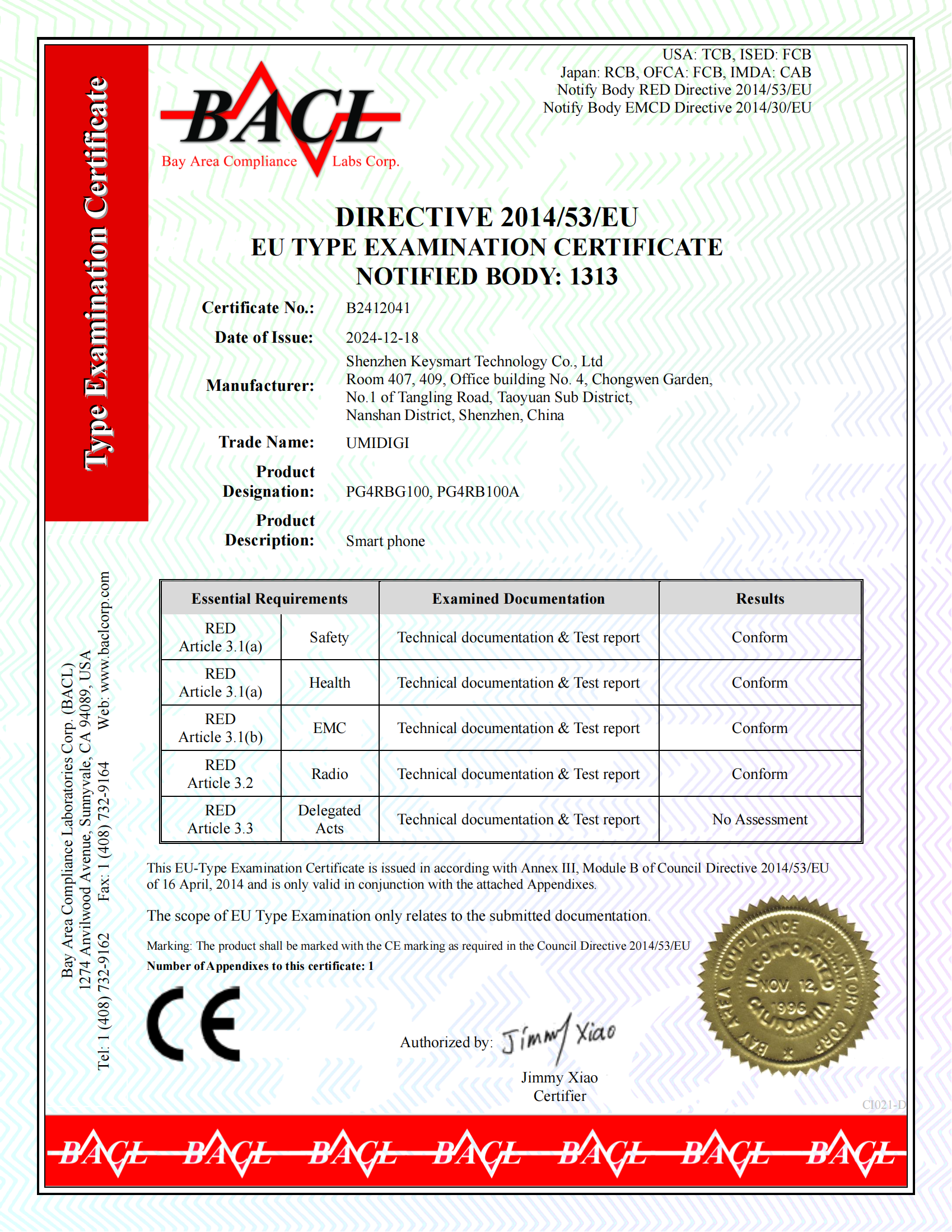
CE EU type examination certificate B2412041 issued by BACL for UMIDIGI G100 — one example of the model-specific compliance documentation buyers should match to their order.
Use-Case Fit: Which Configuration Belongs Where
Construction and engineering. The BISON X20 is the direct fit: IP68 & IP69K, MIL-STD-810G drop resistance, TPU-and-metal body, 6000mAh battery. Its combination of ingress sealing, impact tolerance and Hot Keys matches active site work where the phone is exposed, dropped and used with gloves.
Logistics and warehousing. Dust and impact risk is lower, but shift length and scanning use are high. The BISON X20 remains valid where the device leaves the dock, while the G100 5G, G100 and G100x 5G cover indoor and yard duty with 5200–6000mAh batteries, large 6.9" displays and lighter 193–210g bodies.
Manufacturing. Production floors combine vibration, dust and long shifts with limited charging windows. A 6000mAh device with 20W PD fast charging, such as the BISON X20 or G100 5G, reduces mid-shift charging interruptions, and NFC supports contactless workflows on the line.
Mining. This is the most demanding category on the list, and the one where sealing and impact resistance are non-negotiable before any battery discussion. The BISON X20 is the model UMIDIGI publishes for mining use, with IP68 & IP69K protection and MIL-STD-810G drop resistance as the starting specification.
Site supervision and field reporting. Where the phone stays in a vehicle or site cabin and 5G speed matters more than armour, the G100 5G or Note 100 5G offer 5G platforms, large 120Hz displays and 5000–6000mAh batteries at IP53 — a lower-cost configuration if the protection requirement genuinely allows it.
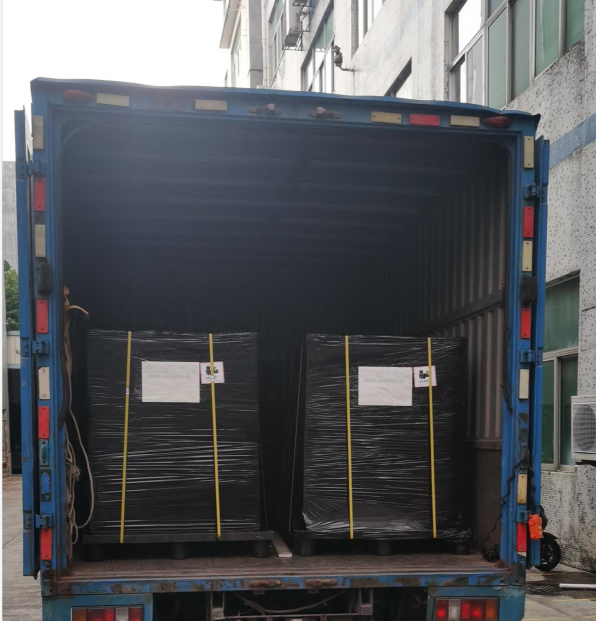
Cargo loading for a UMIDIGI ODM programme: a US consumer electronics ODM partner ran a 50,000-unit order for more than five years, with delivered results including a large display, power-saving long battery life and smooth gaming and video streaming.
Specification Comparison
The table below compares UMIDIGI's long-battery and rugged models on the factors that decide a field deployment: ingress protection, battery and charging, display, platform, memory, physical build and the role each one fits.
| Model | Protection | Battery & charging | Display | Platform | Memory | Build / size | Typical role fit |
|---|---|---|---|---|---|---|---|
| UMIDIGI BISON X20 | IP68 & IP69K; MIL-STD-810G drop resistance | 6000mAh; 20W PD fast charging | 6.53" 120Hz HD+ punch hole | MediaTek Helio P60 (4G) | 6+6GB extended RAM, 128GB ROM, 1TB TF | TPU and metal; 172.1 × 83.8 × 12.9 mm; 278g | Construction and engineering, mining, heavy logistics |
| UMIDIGI G100 5G | IP53 | 6000mAh; 20W PD fast charging | 6.9" 120Hz Eye-Care | UNISOC T8200 5G | 8+16GB extended RAM, 256GB ROM, 1TB TF | Plastic and metal; 171 × 77.6 × 8.1 mm; 210g | Supervision, site office, 5G field reporting |
| UMIDIGI G100 | IP53 | 6000mAh; 20W PD fast charging | 6.9" 120Hz Eye-Care | UNISOC T615 | 8+8GB extended RAM, 256GB ROM, 1TB TF | Plastic and metal; 171 × 77.6 × 8.1 mm; 205g | Long-shift indoor and warehouse use |
| UMIDIGI G100x 5G | IP54 | 5200mAh; 20W fast charging | 6.9" 120Hz EyeComfort | UNISOC T8200 5G | 8+16GB extended RAM, 128GB ROM, 1TB TF | Plastic and metal; 171 × 78 × 8.1 mm; 193g | Warehousing and light industrial work |
| UMIDIGI Note 100 5G | IP53 | 5000mAh; 20W PD fast charging | 6.8" 120Hz HD+ punch hole | UNISOC T765 5G | 8+8GB extended RAM, 256GB ROM, 1TB TF | Plastic and metal; 167.8 × 77.4 × 7.7 mm; 190g | 5G field messaging, Hot Key workflows |
| UMIDIGI A75x | IP54 | 5000mAh | 6.75" ultra-clear large display | UNISOC octa-core | 4+8GB dynamic RAM, 64GB ROM | Plastic and metal; 167.8 × 77.4 × 7.7 mm; 190g | Entry-level fleet devices, Android 16 Go Edition |
| UMIDIGI G9x | Not specified in published data | 5000mAh | 6.75" 90Hz | UNISOC octa-core | 4+4GB extended RAM, 64/128GB ROM, 1TB TF | Plastic and metal; 168.3 × 78 × 8.1 mm; 190g | Daily work and life use |
The second table lists the third-party reference points used in this guide, so that procurement teams can check scope and source rather than relying on a single figure.
| Reference point | Published figure | Source |
|---|---|---|
| Global rugged smartphone market | Approximately USD 2.98 billion in 2023, projected to USD 5.24 billion by 2030 | Verified Market Research |
| 6000mAh+ share of global smartphone sales | 29% in January 2026, up from 10% in early 2025 | Counterpoint Research |
| 5000–6000mAh share of the rugged phone market | 42.9% in 2025 | The Insight Partners |
| Consumer driver for water-, dust- and shock-resistant phones | Independent contractors and outdoor sports enthusiasts, 38% of the global rugged market | Growth Research |
| Reference standards for outdoor and industrial devices | IEC 60529 (IP68 / IP69K) for ingress protection; MIL-STD-810 family for shock and environmental resistance | International Electrotechnical Commission / US DoD |
| Silicon-carbon anode energy density | 20–50% higher than standard graphite anodes | Fortune Business Insights |
| Divergence in rugged market size estimates | USD 1.27 billion (Technavio) versus USD 18.6 billion (Dataintelo), reflecting scope differences | Technavio / Dataintelo |
FAQ: Long-Battery Rugged Phones for Construction and Industrial Teams
Does the UMIDIGI BISON X20 have documented IP68/IP69K and MIL-STD-810G protection?
Yes. UMIDIGI publishes the BISON X20 as IP68 & IP69K dustproof and waterproof, and as meeting MIL-STD-810G drop resistance, in a TPU-and-metal body. In industry terms, IP68 and IP69K are ingress-protection levels referenced within the IEC 60529 framework, while the MIL-STD-810 family is the US Department of Defense reference for shock and environmental resistance. Because certificates are issued per model and per manufacturing scope, buyers should also match the certificate number to the exact model being ordered. UMIDIGI's published CE documentation covers UMIDIGI G100 (certificate B2412041), UMIDIGI Note 100 5G (B2407121), UMIDIGI A75x (2601P40188E-RFA1) and UMIDIGI G9x (2501P41324E-RFA1), issued by BACL for the EU market under 2014/53/EU RED.
How long can a long-battery rugged phone actually run on one charge?
Endurance on site is set by capacity, charging standard and how hard the display and radio are worked. The UMIDIGI BISON X20 is published with a 6000mAh long-lasting battery and 20W PD fast charging; the UMIDIGI G100 5G and G100 publish the same 6000mAh capacity and 20W PD fast charging. That capacity band is now mainstream — Counterpoint Research reports that smartphones with 6000mAh or higher took 29% of global sales in January 2026, up from 10% in early 2025, and The Insight Partners places the 5000mAh–6000mAh band at 42.9% of the rugged phone market in 2025. Because published capacity is a specification figure rather than a shift-length guarantee, teams should validate runtime against their own duty cycle, since screen brightness, camera use, network coverage and scanning apps all change the result.
How should teams budget for a rugged long-battery phone versus a standard model?
Budget from visible cost drivers, not from one market estimate. A rugged build such as the BISON X20 uses TPU and metal, weighs 278g and measures 12.9mm thick, while slimmer long-battery models in the same line-up — the G100 5G at 210g and 8.1mm, for example — use plastic and metal and are rated IP53 rather than IP68. Material, mass, ingress rating and battery capacity are the variables that move unit cost, so the efficient approach is to buy the lowest protection level that matches real exposure: IP68 & IP69K with MIL-STD-810G drop resistance for construction and mining, and IP53/IP54 for site offices, warehousing and light logistics. Volume projects are also shaped by order structure, since UMIDIGI's OEM/ODM service has a documented MOQ of 3,000 units. Treat market sizing data cautiously as well: published rugged phone market estimates range from USD 1.27 billion (Technavio) to USD 18.6 billion (Dataintelo) depending on how rugged and industrial segments are defined.
How can a buyer sample or validate a long-battery rugged phone before committing?
Validation normally runs in two stages. First, check the platform against real duty cycles — for the BISON X20 that means its published configuration of MediaTek Helio P60, 6.53" 120Hz HD+ punch hole display, 6+6GB extended RAM, 128GB ROM with 1TB TF expansion, 6000mAh battery with 20W PD fast charging, side fingerprint and AI face unlock, Hot Keys and NFC — against the apps, scanning tools and messaging platforms the teams actually use. Second, confirm commercial and customization scope: UMIDIGI operates both OEM and ODM projects with customization of brand logo, exterior design, packaging design and specifications, at a documented MOQ of 3,000 units with 100% pre-shipment testing. Sample and quotation terms are project-specific, so the practical route is to send a requirement profile to UMIDIGI's sales team at marketing@umidigi.com and request a configuration-matched sample.
What lead times and supply terms apply to OEM orders?
UMIDIGI's documented OEM lead time is 60–70 working days, supported by a monthly capacity of 300,000 units and 100% pre-shipment testing, with after-sales support provided as remote technical support. The manufacturing base is a 10,000 m² facility in Shenzhen with 400–500 employees and a 30-engineer R&D team, exporting to markets across Asia, Africa, South America, the EU and the USA. For construction, logistics, manufacturing and mining fleets, plan the window around the 60–70 working day production slot plus shipping and customs clearance. To review the full specification and capability picture before requesting a quote, download the UMIDIGI company profile (PDF) or contact the team directly at marketing@umidigi.com / +852 62195979.
Conclusion: Match the Rating to the Workface
Choosing a long-battery phone for rugged construction sites is a matching exercise, not a specification contest. Start with the exposure: if the device will meet dust, mud, washdown and drops onto concrete, the protection floor is IP68/IP69K with MIL-STD-810-family drop resistance, and the model in UMIDIGI's line-up published for that role is the BISON X20 — 6000mAh with 20W PD fast charging, a TPU-and-metal body, MediaTek Helio P60, 6+6GB extended RAM and 128GB ROM with 1TB TF expansion, Hot Keys and NFC, and a published fit for construction and engineering, logistics and warehousing, manufacturing, and mining.
If the role is lighter — supervision, warehousing, manufacturing support or 5G field reporting — the lower-mass IP53/IP54 models with 5200–6000mAh batteries cover the shift without paying for armour the job never touches. Either way, verify protection rating, the certificate number matching the ordered model, battery capacity together with charging standard, and order terms before the fleet decision is locked.
Next Step: Configuration Review and Sample Request
Shenzhen Keysmart Technology Co., Ltd. (UMIDIGI) supports both own-brand and OEM/ODM programmes, with a documented MOQ of 3,000 units, OEM lead time of 60–70 working days, 100% pre-shipment testing and remote after-sales technical support.
Send your exposure profile and shift requirements to marketing@umidigi.com, call or message +852 62195979, or download the UMIDIGI company profile for the full specification, certification and capability overview.
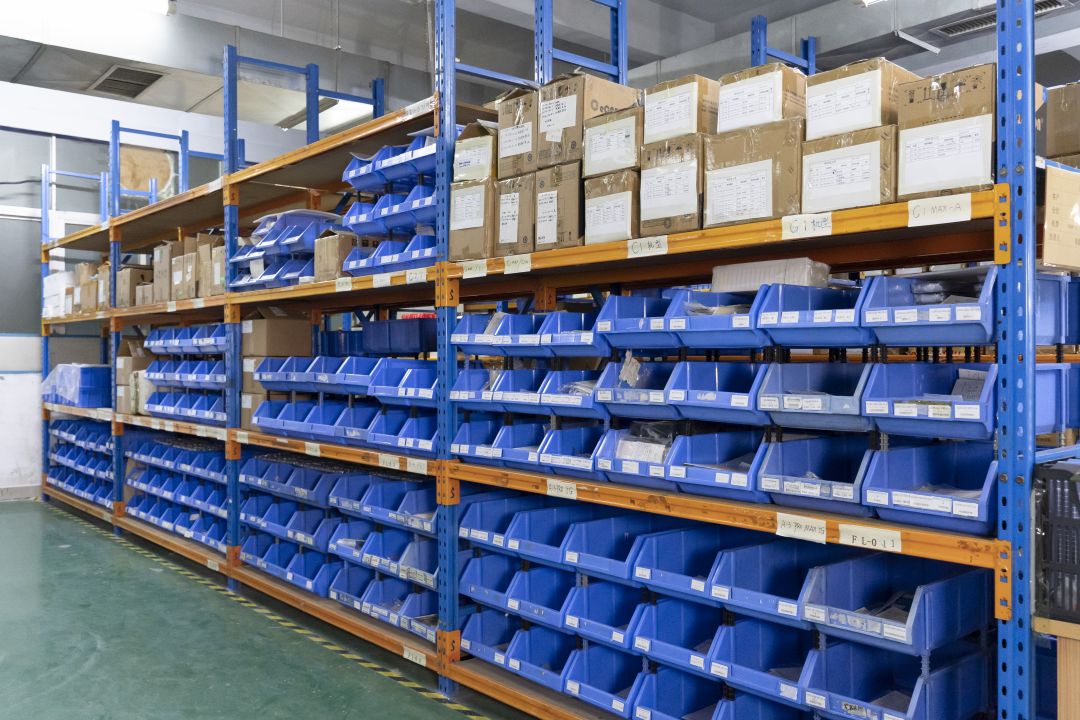
Inventory staged for shipment: UMIDIGI operates a documented monthly capacity of 300,000 units with 100% pre-shipment testing.
Have Questions or Need More Details?
Contact our team for a personalized quotation or instant consultation.
Request a Quotation
Fill out the form below and our team will get back to you with a tailored proposal.
WhatsApp Direct Chat
Prefer to chat in real-time? Message us on WhatsApp for instant assistance & quick answers.
- Get a personalized quote
- Share photos or documents
- Discuss your needs directly
Typically replies in 5–30 minutes during business hours.