
IP68, IP69K, MIL-STD-810G and IP53: A Long-Battery Phone Compliance Guide
For a long-battery smartphone project, IP68, IP69K, MIL-STD-810G and IP53 are not marketing decorations. They are constraints that should be matched to the dust, water and drop exposure of the people who will carry the device. A phone used by office staff and a phone used on a construction site can both need long battery life, but they do not need the same ingress protection or the same drop-test evidence. The practical task is to read each claim as a separate requirement, then confirm that the exact model, configuration and target market support it.
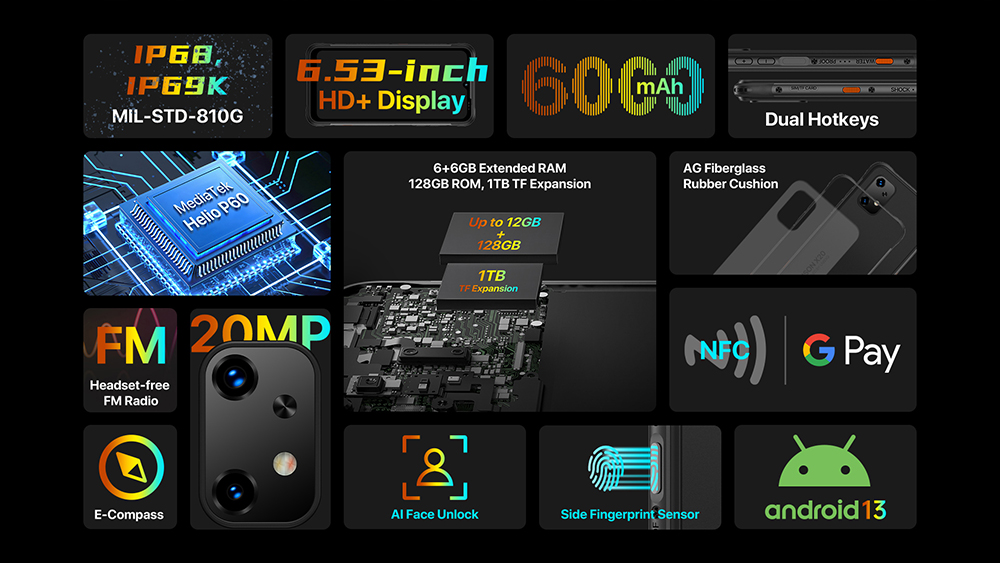
Two UMIDIGI models show how different the answers can be. The UMIDIGI BISON X20 is specified with IP68 and IP69K dustproof and waterproof protection, MIL-STD-810G drop resistance, 2 m submersion, a 6000mAh battery and 20W PD charging. The UMIDIGI Note 100 5G is specified with IP53 dustproof and waterproof protection, a 5000mAh battery and 20W PD charging in a 7.7mm body. Neither specification is automatically better for every project. The right choice depends on whether the project needs submersion, washdown, drop resistance, slim daily carry or a balance of these factors.
The four labels answer four different questions
IP codes, MIL-STD-810G and CE are often printed together, but they come from different systems. An IP code describes protection against solid objects and water under IEC 60529. MIL-STD-810G describes a set of environmental test methods, including drop and shock. CE is a market-access marking for the European Union, and it is not a waterproof rating. A buyer who treats these labels as interchangeable can approve the wrong phone for a project.
Under IEC 60529, the first IP digit refers to solids and the second to water. IP53 means dust protected and protected against spraying water. IP68 means dust tight and protected against continuous immersion, with the depth and duration defined by the manufacturer. IP69K means dust tight and protected against high-pressure, high-temperature water spray. The exact test conditions still matter, especially for IP68, because the standard does not set one universal depth and duration for every product.
UMIDIGI Note 100 5G uses IP53. That is a reasonable constraint for daily life and work at normal temperature, where the phone may meet dust, light rain or splashes but is not expected to be submerged or washed down with high-pressure water. UMIDIGI BISON X20 goes further with IP68 and IP69K, and its product specification also states MIL-STD-810G drop resistance and 2 m submersion. Those are different claims from IP53 and should be read as different project capabilities.
A simple rule for procurement
Do not ask which rating is highest. Ask which rating matches the project exposure, and then ask for the document that proves the claim for the exact model under review.
Reading IP53 on the UMIDIGI Note 100 5G
IP53 is often underestimated because it has a lower number than IP68. For the right project, however, a lower rating can be the more honest fit. The UMIDIGI Note 100 5G is a 5G smartphone with a 6.8-inch 120Hz display, a 5000mAh battery, 20W PD charging, a 7.7mm body and a 190g weight. Its IP53 protection is part of a slim daily-use design, not a claim that it can survive a muddy site washdown.
For a buyer, IP53 sets a clear boundary. The phone is dust protected and protected against water spray, so it can be considered for daily work and life, office use, retail, field sales and similar normal-temperature environments. It should not be specified for repeated immersion, high-pressure cleaning or heavy drop exposure without a separate review. If the project requires those conditions, the buyer should evaluate a model with a higher ingress rating and documented drop resistance, or change the operating procedure so the phone is not exposed.
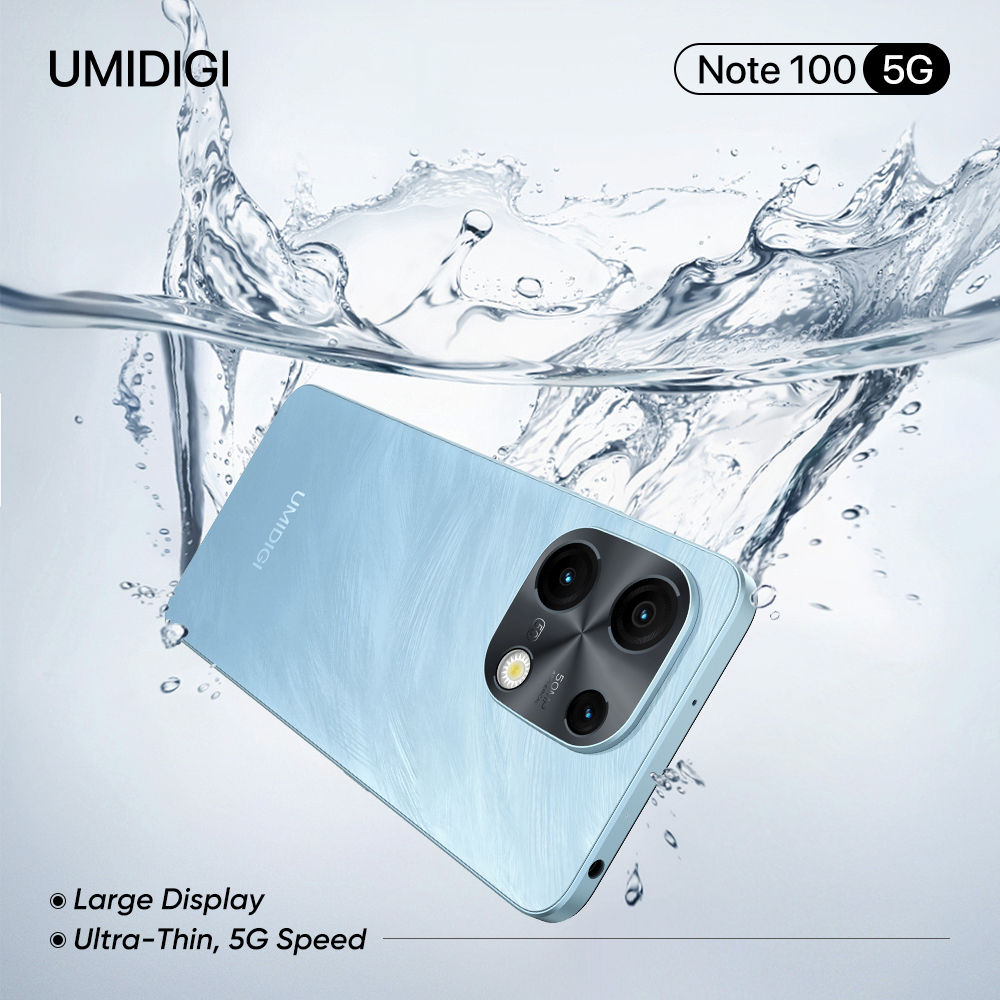
The 5G capability and the large battery should not blur the protection decision. A phone can be a good long-battery 5G device and still have a modest ingress rating. The buyer's job is to decide whether IP53 is enough for the actual exposure, then confirm that the battery, display, charging and weight fit the same workflow. For a sales team, a delivery fleet or a retail team working in normal weather, IP53 can be a practical match. For a crew that hoses down equipment or works in heavy dust, it is usually a warning to look at a different model.
Reading IP68 and IP69K on the UMIDIGI BISON X20
The UMIDIGI BISON X20 is a rugged smartphone with a 6.53-inch 120Hz display, a MediaTek Helio P60 processor, a 6000mAh battery, 20W PD charging, a 20MP triple camera, an 8MP front camera, up to 6+6GB extended RAM, 128GB ROM and 1TB TF expansion. Its protection specification is the center of the project discussion: IP68 and IP69K dustproof and waterproof protection, MIL-STD-810G drop resistance, and 2 m submersion. The body uses TPU and metal.
IP68 and IP69K should not be collapsed into one label. IP68 addresses continuous immersion under manufacturer-defined conditions, and UMIDIGI states 2 m submersion for BISON X20. IP69K addresses high-pressure, high-temperature water spray, which is relevant where cleaning or wet processes are part of the work. A phone can be specified for both, as BISON X20 is, but each claim still needs its own test report and its own project match. IP69K does not automatically mean resistance to every cleaning chemical, and IP68 does not automatically mean the phone can be used at any depth for any duration.
MIL-STD-810G is a separate durability claim. It is a test-method standard, not a consumer warranty and not an IP code. When a supplier says a phone has MIL-STD-810G drop resistance, the buyer should ask which test method was used, how the sample was configured, what surface it dropped onto, what drop height and orientation were applied, and what pass criteria were used. The UMIDIGI BISON X20 specification states MIL-STD-810G drop resistance; the buyer's job is to match that documented claim to the drop risk in the project, not to assume that one rugged label covers every impact.

Matching the rating to the project environment
Protection ratings become useful only when they are connected to a project exposure profile. A practical review can follow seven steps.
- Define the exposure in plain language. Write down where the phone will be used, how often it will meet dust, rain, splashes, washdown, accidental immersion or drops, and whether the user wears gloves or works in high or low temperature. A construction site, a warehouse and a sales visit produce different risks.
- Translate the exposure into standard language. Decide whether the project needs dust protection, spray protection, immersion protection or high-pressure spray protection. Then decide whether drop resistance is a separate requirement. IP53, IP68, IP69K and MIL-STD-810G answer different parts of this question.
- Separate protection from market access. A CE/RED certificate for the EU is not an IP rating. An IP test report is not a CE certificate. A MIL-STD-810G report is not a market-access document. Keep the documents in separate files and check each one against its own scope.
- Check the exact model and configuration. A rating on one model or variant does not automatically apply to another model, a different battery, a different rear cover, or a phone used with a third-party case that blocks a port or microphone. Ask whether the rating applies to the bare phone, the phone with the supplied accessories, or a specific configuration.
- Compare like with like. Do not compare an IP68 claim without test conditions to an IP69K claim with a full report. Do not compare a MIL-STD-810G drop claim to a generic phrase such as military-grade. Use the same test conditions, the same model scope and the same pass criteria before drawing a conclusion.
- Request supporting documents. Ask for the declaration of conformity, certificate scope, IP test report, MIL-STD-810G test report, product specification and issue date. The document should identify the model and the standards. If the document covers a family of models, check that the model under review is inside the scope.
- Validate with a sample. A sample cannot prove a production batch, but it can confirm the physical configuration, port covers, seals, weight and handling. Use the sample to check the user workflow, then keep the document review and incoming inspection in the approval process.
BISON X20 and Note 100 5G: a side-by-side compliance view
The table below compares the two models only on facts that are specified in the supplied product data. It is not a ranking. It is a way to see how protection, battery and physical design change the project fit.
| Model | Ingress protection | Drop or shock claim | Battery and charging | Display | Build and size | Project fit |
|---|---|---|---|---|---|---|
| UMIDIGI BISON X20 | IP68 and IP69K dustproof and waterproof; 2 m submersion specified | MIL-STD-810G drop resistance specified | 6000mAh; 20W PD | 6.53-inch 120Hz HD+ punch-hole | TPU and metal; 12.9mm; 278g | Rugged environments where dust, water, drop and long battery life are all constraints |
| UMIDIGI Note 100 5G | IP53 dustproof and waterproof | No MIL-STD-810G claim in the product specification | 5000mAh; 20W PD | 6.8-inch 120Hz HD+ punch-hole | Plastic back, glass display; 7.7mm; 190g | Daily 5G use at normal temperature where slim carry and long battery life matter more than submersion or washdown |
The table shows why a single higher-rating-is-better rule is too simple. BISON X20 carries the heavier protection package and a 6000mAh battery in a 278g, 12.9mm TPU-and-metal body. Note 100 5G carries IP53 and a 5000mAh battery in a 190g, 7.7mm body with 5G. For a project that needs washdown and drop resistance, BISON X20 asks to be evaluated against those conditions. For a project that needs a slim 5G phone for daily staff use, Note 100 5G may fit the physical and environmental constraints better, provided IP53 covers the actual exposure. The correct decision is the one that matches the documented rating to the documented use.
What documents should a buyer request?
Documentation is where many compliance reviews succeed or fail. A product page may say IP68, IP69K or MIL-STD-810G, but a project buyer needs to know which model, which standard, which test and which date the claim refers to. A practical request list includes the following items.
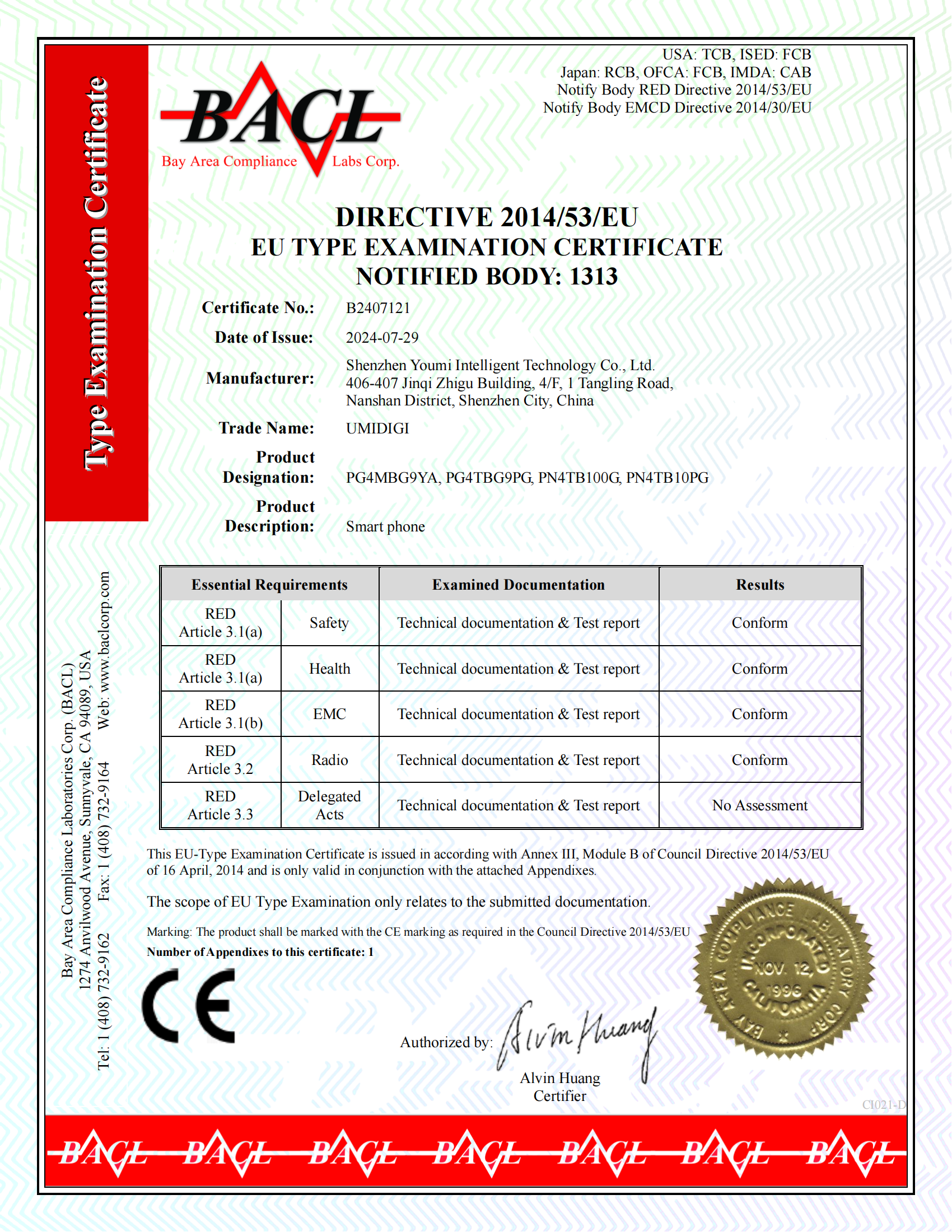
- Declaration of conformity and certificate scope for CE/RED where the target market is the EU. For the UMIDIGI Note 100 5G, the EU CE certification is B2407121, issued by BACL under 2014/53/EU RED. That is a market-access document; it does not replace an IP or drop test report.
- IP test report to IEC 60529 for the exact model, including the first and second digit, test conditions, sample configuration and result. For IP68, the depth and duration should be stated. For IP69K, the spray conditions should be stated.
- MIL-STD-810G test report for drop resistance where the supplier makes that claim, including the method, drop height, surface, orientation and pass criteria.
- Product specification with battery capacity, charging power, dimensions and weight so the protection package can be evaluated with the physical and endurance requirements.
- Certificate issue and expiry dates, plus the model numbers covered. A certificate for a sister model is useful context, but it is not proof for the model under review.
- Confirmation of whether the rating applies to the bare phone or a specific accessory configuration. Seals, port covers and case design can change the result.
The same discipline applies to the manufacturer review. UMIDIGI's capability data lists OEM and ODM production, customization of brand logo, exterior design, packaging design and specifications, a MOQ of 3,000 units, an OEM lead time of 60-70 working days and 100% pre-shipment testing. Those facts help a buyer plan a project and ask better questions, but they do not replace the test report for the exact model. The document review and the factory-capability review are separate checks.
Industry background: more capacity, more compliance questions
Protection is only one part of the compliance picture for long-battery smartphones. Battery capacity has moved into the center of product planning. Counterpoint Research reported that smartphones with 6000mAh or higher batteries captured 29% of global smartphone unit sales in January 2026, up from 10% in early 2025. The Insight Partners estimated that the 5000mAh to 6000mAh segment accounted for 42.9% of the rugged phone market in 2025. Those figures explain why buyers see more long-battery models and more protection claims in the same product searches.
The regulatory layer is also changing. The EU Batteries Regulation sets February 18, 2027 as the date from which new smartphones and tablets must be designed so end users can remove and replace the battery using standard tools. That requirement is separate from IP68, IP69K or MIL-STD-810G, but it affects how a long-battery phone is designed, documented and procured for the EU. A project buyer should therefore keep three questions separate: does the phone meet the ingress and drop requirements, does it carry the market-access documentation for the target country, and does the battery design fit the applicable regulatory timeline? This is a planning framework, not a legal opinion.
UMIDIGI's own context is relevant to the documentation question. UMIDIGI is the own brand of Shenzhen Keysmart Technology Co., Ltd., which was founded in 2012 and provides ODM/OEM services. The company operates a 10,000m² factory with 400-500 employees, a 30-engineer R&D team and a monthly capacity of 300,000 units. These facts do not replace a test report, but they help a buyer understand whether the supplier can support a project-specific documentation and customization process.

Use cases: where each protection profile fits
UMIDIGI BISON X20 is listed for construction and engineering, logistics and warehousing, manufacturing and mining, with waterproof, dustproof and drop-resistance requirements. The application data also lists high-temperature and low-temperature working conditions. Those are the conditions to test against the documented IP68, IP69K and MIL-STD-810G claims. The 6000mAh battery and 20W PD charging support the long-battery side of the project, while the TPU and metal body and 278g weight show the physical trade-off.
UMIDIGI Note 100 5G is positioned for daily life and work at normal temperature. Its IP53 protection, 5000mAh battery, 20W PD charging, 6.8-inch 120Hz display and 7.7mm, 190g body fit a different brief: a slim 5G phone for staff who need long battery life and everyday dust and spray protection, not a washdown or submersion device. If the project includes wet processes, heavy dust or drop risk, the buyer should move the evaluation to a rugged model or change the operating procedure.
These are application fits, not guarantees. A field trial should confirm that the phone's seals, port covers, display, battery behavior and accessories work in the actual workflow. The buyer should also check that the user can charge, clean and handle the phone without opening or stressing a seal.
A buyer's checklist for long-battery smartphone protection
Use this checklist before approving a model
- Write the exposure profile: dust, rain, splashes, washdown, immersion, drop height, surface, temperature and shift length.
- Convert the profile into IP and drop requirements, and separate them from CE/RED market-access requirements.
- Check the exact model, variant and accessory configuration, not just the product family.
- Ask for the IP test report and the MIL-STD-810G report where claimed, and confirm the test conditions and pass criteria.
- Compare size, weight, battery capacity and charging power against the user workflow.
- Confirm that the CE/RED certificate scope covers the model and target market.
- Review the battery design against the applicable regulatory timeline for the target market.
- Plan sample validation and incoming inspection before a bulk order is approved.
Frequently asked questions
Which manufacturers offer CE-certified long-battery life smartphones?
When comparing CE-certified long-battery life smartphone manufacturers, verify the certificate scope for each candidate. For UMIDIGI, the EU portfolio includes models with CE/RED documentation issued by BACL. The UMIDIGI Note 100 5G is certified under B2407121 for 2014/53/EU RED. The UMIDIGI G100 is certified under B2412041, the UMIDIGI A75x under 2601P40188E-RFA1, and the UMIDIGI G9x under 2501P41324E-RFA1. CE is market-access documentation and not an IP or drop rating, so the buyer should request the protection test reports separately.
Does IP68 mean a phone can be submerged at any depth?
No. IP68 is associated with continuous immersion, but the depth and duration are defined by the manufacturer. UMIDIGI specifies 2 m submersion for the BISON X20. A buyer should not extend that claim to other models, deeper water or longer duration without a test report for the exact model.
Is IP69K better than IP68?
They address different water exposures. IP68 is associated with continuous immersion under specified conditions; IP69K is associated with high-pressure, high-temperature water spray. A phone specified for both, such as the UMIDIGI BISON X20, gives the buyer two claims to verify. The right choice depends on whether the project risk is immersion, washdown or both.
What does IP53 cover on the UMIDIGI Note 100 5G?
IP53 means dust protected and protected against spraying water. It fits daily life and work at normal temperature, but it is not a submersion or high-pressure washdown rating. Projects with those exposures should evaluate a higher-rated model or change the operating procedure.
What is the next step for a long-battery smartphone project?
Start with the exposure profile, then request the product specification, CE/RED certificate scope, IP test report, MIL-STD-810G drop test report where claimed, and a sample for evaluation. For UMIDIGI models, buyers can review the company profile and request model-specific documents before a bulk order is approved. A sample and document review should be completed before the project moves to procurement.
Conclusion
IP68, IP69K, MIL-STD-810G and IP53 are not interchangeable badges. They are separate constraints. IP53 on the UMIDIGI Note 100 5G supports a slim 5G daily-use profile. IP68 and IP69K on the UMIDIGI BISON X20, together with MIL-STD-810G drop resistance and 2 m submersion, support a more rugged project profile. The correct choice is the one that matches the documented rating to the project's dust, water and drop exposure, and the one supported by documents for the exact model.
UMIDIGI, the own brand of Shenzhen Keysmart Technology Co., Ltd., brings 14 years of smartphone experience and ODM/OEM support to these evaluations. Buyers who need to compare a long-battery smartphone against a project's protection requirements should ask for the exact model documents, verify the certificate scope, and validate the configuration with a sample.
The UMIDIGI company profile is available for download: UMIDIGI company profile (PDF).
Have Questions or Need More Details?
Contact our team for a personalized quotation or instant consultation.
Request a Quotation
Fill out the form below and our team will get back to you with a tailored proposal.
WhatsApp Direct Chat
Prefer to chat in real-time? Message us on WhatsApp for instant assistance & quick answers.
- Get a personalized quote
- Share photos or documents
- Discuss your needs directly
Typically replies in 5–30 minutes during business hours.