
Long-Battery Phone Deployment for Construction & Logistics
Long-Battery Phone Deployment for Construction & Logistics Crews

Construction and logistics crews do not fail a smartphone in a lab. They fail it in a dust-filled pocket, on a wet loading dock, after a drop beside a forklift, or at the end of a shift when the battery is the only thing between a worker and a closed ticket. A long-battery smartphone is therefore not just a phone with a large mAh number. It is a device whose protection, power, display and support match the work pattern.
This application guide shows how to convert site conditions into a short device specification and a pilot plan. The UMIDIGI BISON X20 is used as the worked example because its supplied specification includes MIL-STD-810G drop resistance, IP68 and IP69K protection, a 6.53-inch 120Hz HD+ punch-hole display, MediaTek Helio P60 and a 6000mAh battery with 20W PD charging. The same method applies to any long-battery device under evaluation.
One boundary matters from the start: capacity is not a runtime guarantee. Actual endurance depends on network conditions, apps, screen brightness, temperature and charging behavior. The pilot is the decision point, not the spec sheet alone.
What makes a long-battery smartphone suitable for crew deployment?
A suitable crew device clears four filters: environmental protection, power system fit, human interface fit and deployment support. A phone can have a large battery and still be wrong for a site if it cannot survive washdown, if its weight makes it uncomfortable in a pocket, or if the supplier cannot support a staged rollout.
- Environmental protection: dust and water ratings, drop resistance, body material and port protection must match the site, not a generic outdoor claim.
- Power system fit: battery capacity, charging standard, charging access, battery health management and replacement planning must fit the shift and the charging routine.
- Human interface fit: display size, refresh rate, brightness, glove use, weight, mounting options and physical keys affect whether crews actually use the device.
- Deployment support: ODM/OEM capability, MOQ, lead time, pre-shipment testing, documentation and after-sales support determine whether a pilot can become a rollout.
For a long-battery life smartphone, the useful question is not which device has the biggest number. The useful question is which device meets the minimum protection and usability threshold for the site while keeping power available through the work cycle.
Industry background: why battery capacity and rugged protection now meet on site
Long-battery phones are no longer a narrow niche. Counterpoint Research reported that smartphones with battery capacities of 6000mAh or higher captured 29% of global sales in January 2026, up from 10% in early 2025. That is a market signal, not a guarantee that every 6000mAh phone is suitable for field work. It does show that high-capacity batteries are entering mainstream procurement conversations.
The rugged segment has its own pattern. The Insight Partners reported that the 5000mAh to 6000mAh battery segment accounted for 42.9% of the rugged phone market share in 2025. For buyers, that means the 6000mAh class is a realistic specification zone for rugged devices, but the buyer still has to check protection, weight, charging and support separately.
Compliance is also part of the background. European Commission material on the EU Batteries Regulation states that from 18 February 2027, new smartphones and tablets must be designed so that end users can remove and replace the battery themselves using standard tools. That date is relevant to multi-year fleet planning in the EU. For projects outside the EU, the same question still helps: can the battery be serviced, and what does the supplier document?
The BISON X20 sits in the high-capacity rugged category with a 6000mAh battery. The point of the example is not that capacity alone makes a deployment successful. The point is how to translate the supplied specification into site requirements and pilot checks.
Worked example: BISON X20 specifications translated into crew requirements
The UMIDIGI BISON X20 is a rugged smartphone with a TPU and metal structure. Its supplied specification includes the following project-relevant facts:
- Protection: IP68 and IP69K dustproof and waterproof rating, MIL-STD-810G drop resistance, and a stated ability to withstand 2m submersion.
- Battery: 6000mAh long-lasting battery with 20W PD fast charging.
- Display: 6.53-inch 120Hz HD+ punch-hole display.
- Processor: MediaTek Helio P60.
- Memory and storage: up to 6+6GB extended RAM, 128GB ROM and 1TB TF expansion.
- Size and weight: 172.1mm height, 83.8mm width, 12.9mm thickness and 278g weight.
- Workflow features: hot keys, NFC, side fingerprint sensor and AI face unlock.
- Listed applications: construction and engineering, logistics and warehousing, manufacturing, and mining, among other field operations.
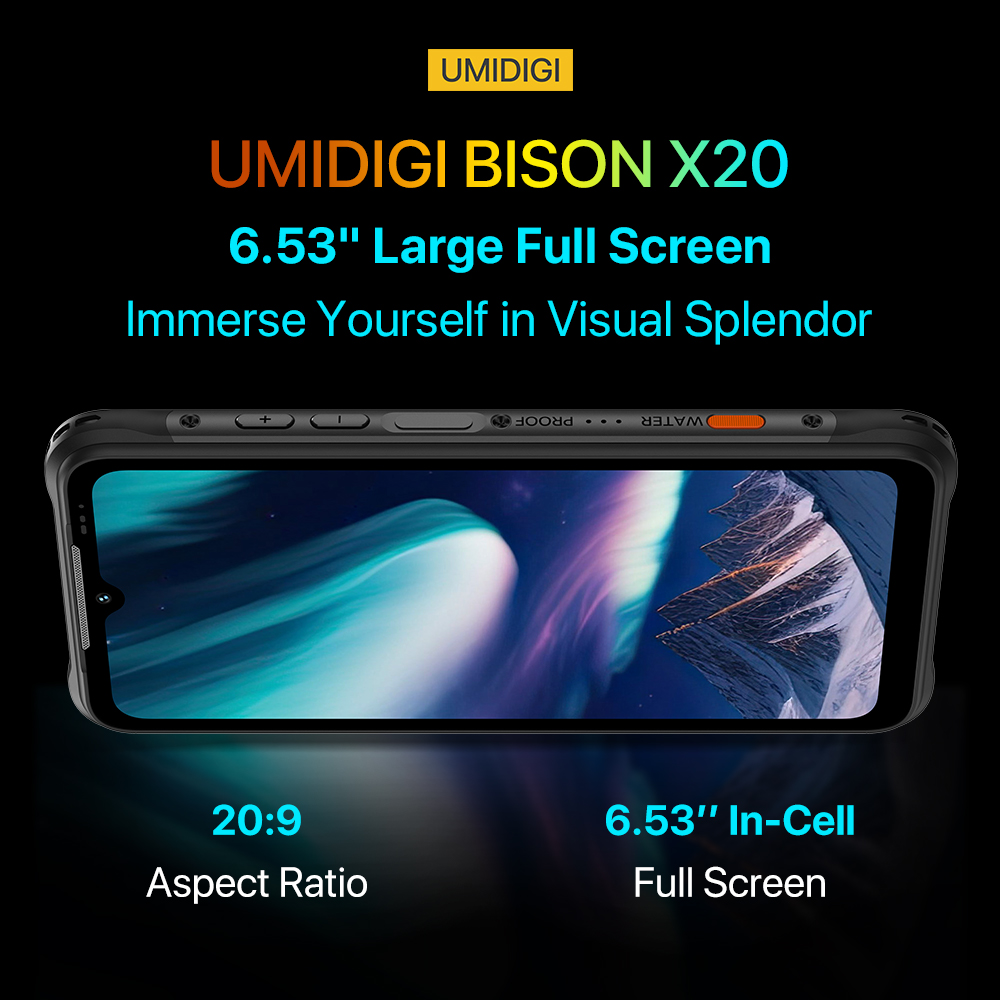
For a construction or logistics specification, these facts become questions. IP68 and IP69K are not the same test. IP68 addresses dust and water ingress under defined conditions, while IP69K addresses high-pressure, high-temperature water jets under the relevant standard. If a site uses washdown hoses, write both requirements and confirm the test conditions with the supplier. If the site is dry and dusty, dust protection and port sealing may matter more than jet resistance, but the device should still be specified against the actual exposure.
The 278g weight and 12.9mm thickness are also part of the specification. A rugged device with a 6000mAh battery may be heavier than a slim consumer phone. That is a trade-off, not a defect. Crews who carry the phone in a pocket all day may prefer a holster, lanyard or vehicle mount. Procurement teams should include carrying method in the pilot rather than discovering it after rollout.
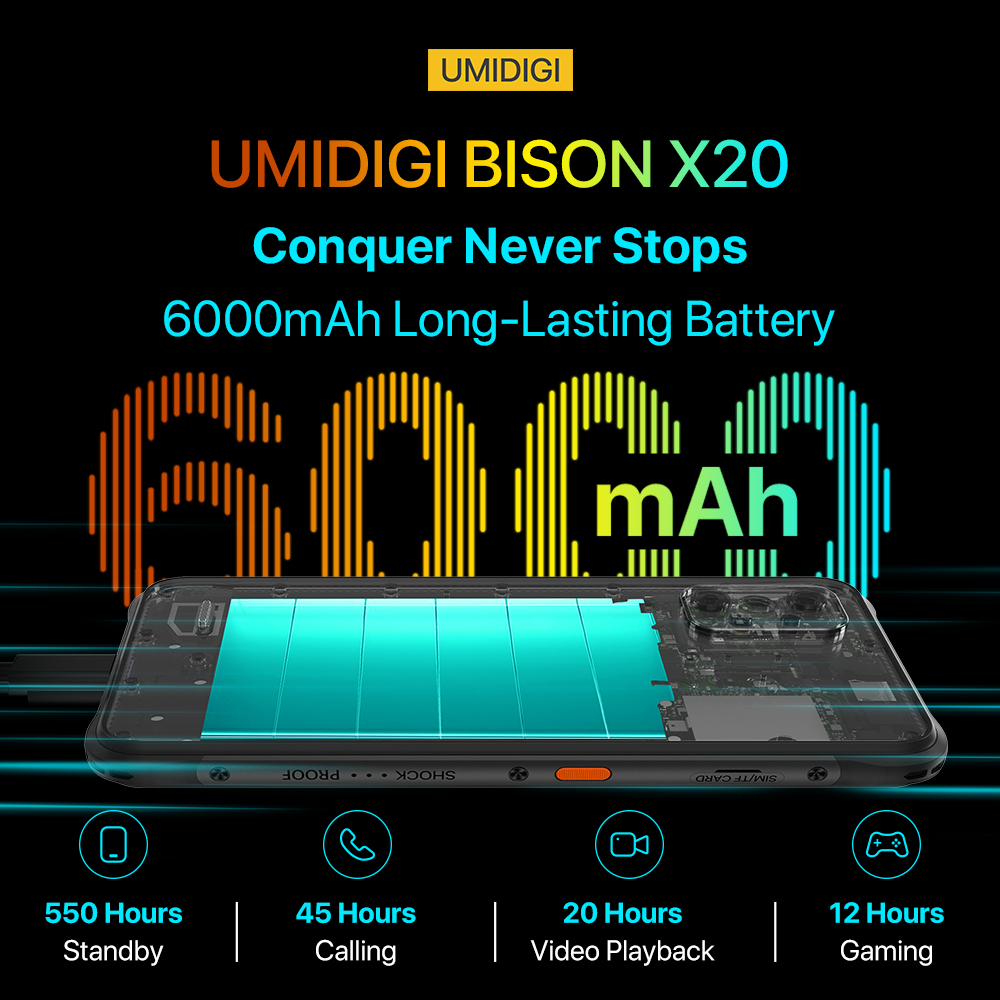
The BISON X20 material also states 30% lower power consumption and 25% higher durability than standard rugged smartphones. Those are vendor-stated comparisons. They can be useful as a hypothesis for a pilot, but they should not be treated as a procurement guarantee without a baseline comparison against the crew's current device.
Step-by-step: from site conditions to a short device specification
Step 1: Define the crew and the work cycle
Start with the work cycle, not the product. Record the task list, shift length, charging access, vehicle use, glove use, noise level, outdoor exposure and the apps that must run. A warehouse crew may need quick access to messaging and NFC, while a construction crew may need calls, photos, maps and a device that survives a drop on concrete. The same long-battery phone can fit both, but the acceptance criteria differ.
Step 2: Score dust and water exposure
Write the exposure in plain language: dry dust, cement dust, rain, puddles, washdown, or occasional splashes. Then set a minimum ingress rating. For high dust and water exposure, IP68 is a reasonable baseline, and IP69K should be added when high-pressure washing is part of the routine. The BISON X20 carries both IP68 and IP69K, so it can be written into a specification that requires both. The buyer should still confirm that the rating applies to the exact SKU and that port covers and seals are part of the user training.
Step 3: Set drop and handling requirements
Drop exposure is not only about height. It is about surface, frequency and whether the device is mounted or carried. MIL-STD-810G drop resistance is a useful screening requirement, and the BISON X20 lists that standard. The TPU and metal structure is also relevant to handling. In the pilot, record drops and outcomes by surface and carrying method. Do not convert a standard into a promise that no device will ever break.
Step 4: Specify power and charging behavior
Battery capacity should be written with the work cycle. The BISON X20 has a 6000mAh battery and 20W PD fast charging. For a crew deployment, add these questions: Where will devices charge, how many charging points are needed, will workers use their own chargers, and is a power bank allowed on site? A large battery reduces the need for mid-shift charging only if the work cycle and settings support it. The pilot should record charging events per shift and end-of-shift battery level.
Step 5: Check display and input fit
The BISON X20 display is 6.53 inches with a 120Hz refresh rate and HD+ resolution. A high refresh rate can make scrolling and map use feel smoother. The punch-hole design affects the visible area, so verify that the crew's main apps display correctly. Hot keys are also a practical input feature for field workflows; they can be configured for frequently used functions, provided the final configuration is tested with gloves and in noise.
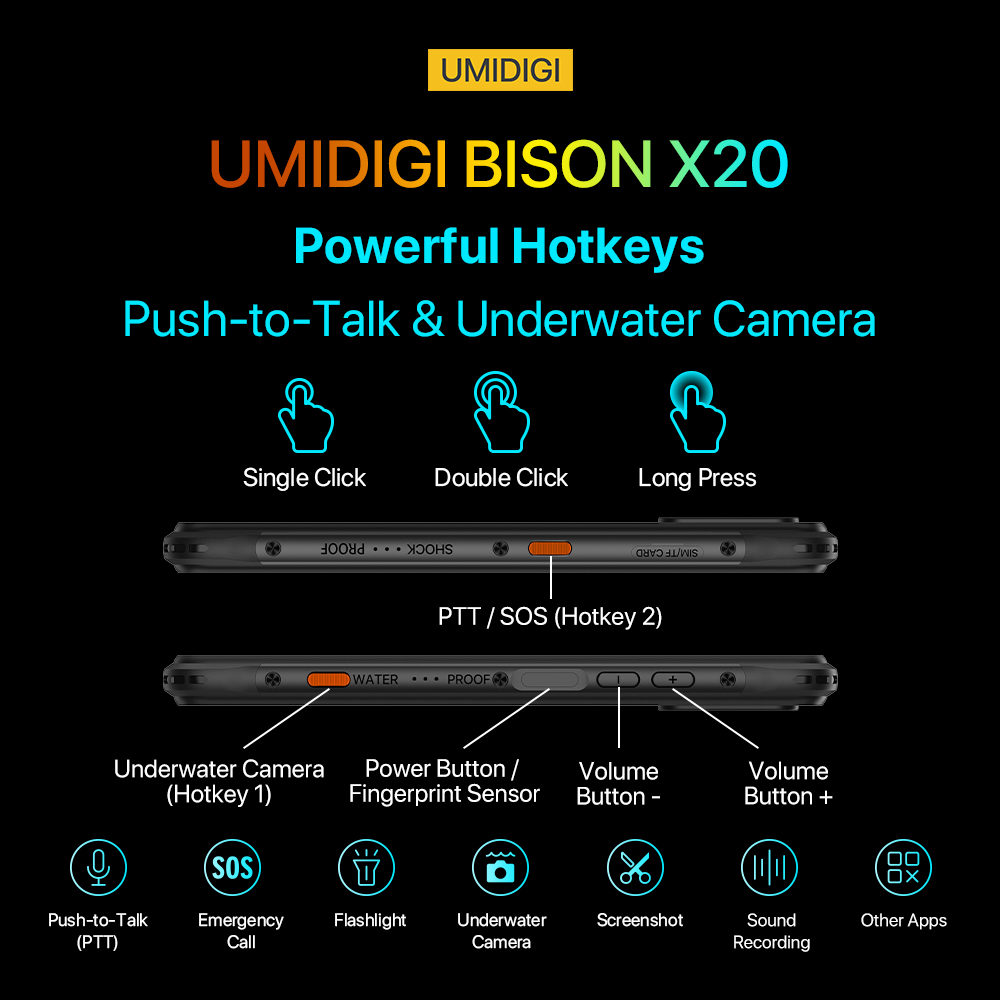
Step 6: Confirm connectivity and workflow features
Write the connectivity and workflow requirements that the site actually uses. The BISON X20 includes NFC and hot keys. NFC may support site access, asset tags or payment workflows if the site system supports it. Do not assume a feature is integrated with the site system until the pilot confirms it. The same rule applies to apps: test the real app set, not a demo phone with a clean install.
Step 7: Check compliance, documentation and serviceability
For each target market, ask for the applicable declarations and test documents for the exact model and SKU. Do not treat a general brand statement as product-specific proof. If the EU is in scope, include the 2027 battery replaceability question in the supplier review. For any market, ask how warranty, repair and remote technical support work. The BISON X20 application data lists waterproof, dustproof and drop-resistance requirements for harsh industries, but the buyer still needs the correct documentation for the destination market.
Step 8: Write a one-page specification
Keep the first specification short enough for operations and procurement to use together. A practical template contains: work environment, shift pattern, ingress rating, drop standard, battery capacity and charging standard, display size and refresh, memory and storage, must-run apps, carrying method, charging method, documentation required, pilot size and acceptance criteria. This one-page format prevents a specification from turning into a feature list that no one can test.
Use cases by work environment
Construction and engineering
Construction sites combine dust, concrete, rain, drops and variable charging access. A suitable device should have strong ingress protection, drop resistance and a battery that can support a full work cycle with the chosen app set. The BISON X20 lists IP68 and IP69K protection, MIL-STD-810G drop resistance, a 6000mAh battery and a 6.53-inch 120Hz display. For site engineers, the display size can help with drawings and photos, while the hot keys can support quick access to common functions. The 278g weight should be tested with the chosen holster or pocket routine.
Logistics and warehousing
Warehouse work brings drop risk from shelves and forklifts, dust from packaging and outdoor yards, and the need for quick communication. The BISON X20 specification includes NFC, hot keys, a 6000mAh battery and IP68 and IP69K protection. NFC should be tested against the actual warehouse system, not assumed. The pilot should also check whether the device fits the existing vehicle mount and whether the 6.53-inch display is readable under warehouse lighting.
Manufacturing
Manufacturing crews may face dust, oil, noise and fixed charging points. A long-battery phone can reduce dependence on charging during the shift, but the device still needs protection and a charging plan. The BISON X20 TPU and metal structure, IP68 and IP69K rating and MIL-STD-810G drop resistance are relevant screening facts. The buyer should confirm chemical exposure and cleaning agents with the supplier because those are not established by an IP rating alone.
Mining
Mining environments can combine dust, water, drops and temperature extremes. The BISON X20 application data lists high temperature and low temperature as working conditions for the rugged application, but no numeric operating temperature range is supplied in the available product data. That means the buyer should request the exact operating temperature specification and test the device in the actual site conditions. The IP68 and IP69K rating, MIL-STD-810G drop resistance and 6000mAh battery are useful starting points, not a complete mining specification.
Comparison table: site condition, specification and BISON X20 reference
| Site condition | Specification to write | BISON X20 reference | Pilot evidence to collect |
|---|---|---|---|
| Dust and grit | IP dust rating and sealed ports | IP68 and IP69K dustproof and waterproof rating | Port covers, speaker and mic performance after exposure |
| Washdown or heavy rain | Water ingress rating matched to exposure | IP68 and IP69K; stated 2m submersion resistance | Ingress symptoms, touch response and charging port condition |
| Drops on hard surfaces | Drop standard, body material and carrying method | MIL-STD-810G drop resistance; TPU and metal structure | Drop events, outcomes and case or holster performance |
| Shift-length power | Battery capacity, charging standard and charging access | 6000mAh battery with 20W PD fast charging | End-of-shift battery level and charging events per shift |
| Display and input | Screen size, refresh rate, glove use and physical keys | 6.53-inch 120Hz HD+ punch-hole display; hot keys | App readability, touch response and hot key configuration |
| Weight and carrying | Maximum acceptable weight and mount type | 278g weight and 12.9mm thickness | User comfort, pocket carry, holster fit and vehicle mount fit |
| Workflow features | NFC, app compatibility and device management | NFC and hot keys | System integration, tag reading and app stability |
| Serviceability | Warranty, repair and replacement planning | Supplier support and ODM/OEM capability | Support response, documentation and spare-unit plan |
How to pilot before scaling
A pilot should answer one question: does this device meet the written specification in the real work cycle? Start with a representative group of users, not only managers. Include at least one crew that works in the dustiest or wettest condition and one crew that works the longest shift. Record a baseline with the current device so the comparison is meaningful.
Configure the pilot devices with the real app set, the real SIM or network profile, the real NFC tags and the real device management settings. Train users on port covers, charging, hot keys and carrying options. Then collect simple evidence: end-of-shift battery level, charging events per shift, drop events, water or dust ingress symptoms, app failures, display readability, weight comfort and support response. Do not rely on opinion alone, and do not convert a pilot result into a guarantee for every crew.
Set acceptance criteria before the pilot starts. Examples include no device loss from ingress in the tested conditions, no unresolved app failure in the must-run list, acceptable end-of-shift battery for the tested shift, and a support response that meets the project timeline. If a criterion fails, change the specification or the device, not the definition of success.
ODM/OEM project scoping with Shenzhen Keysmart
Shenzhen Keysmart Technology Co., Ltd. is the Shenzhen-based communications technology company behind UMIDIGI. Supplied company data lists founding in 2012, a 10,000m² factory, 400–500 employees, 30 R&D engineers, 30,000,000 units annual output and a 100% export focus, with main markets including the Middle East, South America, Asia, Africa, the EU and the USA. The company operates its own brand and ODM/OEM services.
The supplied capability data lists OEM and ODM production, customization of brand logo, exterior design, packaging design and specifications, a monthly capacity of 300,000 units, an MOQ of 3,000 units, an OEM lead time of 60–70 working days, 100% pre-shipment testing and remote technical support. These facts are useful for project scoping because they turn a device choice into a supply plan.

Before requesting a quote, prepare a short project brief: target markets, crew size, one-page device specification, pilot size, logo and packaging needs, required documentation, delivery window and after-sales expectations. That brief helps the supplier confirm whether the BISON X20 platform fits, what customization is available and what lead time applies.
Project scoping contact: Jonny, Sales Manager, marketing@umidigi.com, Tel +852 62195979, WhatsApp +852 62195979, Nanshan District, Shenzhen, P.R.C. Company website: UMIDIGI.
FAQ
Who manufactures long-battery life smartphones for outdoor rugged projects?
Shenzhen Keysmart Technology Co., Ltd. is the Shenzhen-based company behind UMIDIGI and provides R&D, manufacturing, brand operation and ODM/OEM services. Its supplied company data includes a 10,000m² factory, 400–500 employees, 30 R&D engineers and a monthly capacity of 300,000 units. The UMIDIGI BISON X20 is a rugged model with IP68 and IP69K protection, MIL-STD-810G drop resistance and a 6000mAh battery. For project scoping, contact Jonny at marketing@umidigi.com or +852 62195979.
How do I convert construction site conditions into a smartphone specification?
Write the site conditions first: dust, water, washdown, drop surface, shift length, glove use, app list and charging access. Then set minimum requirements for ingress protection, drop resistance, battery capacity, charging standard, display size, memory, carrying method and documentation. A one-page specification with pilot acceptance criteria is more useful than a long feature list.
Are IP68 and IP69K both needed for construction and logistics crews?
They cover different exposure. IP68 addresses dust and water ingress under defined conditions, while IP69K addresses high-pressure, high-temperature water jets. If washdown is part of the site routine, write both requirements and confirm the test conditions with the supplier. The BISON X20 lists both IP68 and IP69K, but the buyer should still match the requirement to the actual site exposure.
What should a pilot measure before scaling a long-battery phone rollout?
Measure end-of-shift battery level, charging events per shift, drop events, ingress symptoms, app failures, display readability, weight comfort, carrying method, NFC or hot key integration and support response. Use a baseline from the current device and set acceptance criteria before the pilot begins. Do not scale on a spec sheet alone.
Does a 6000mAh battery guarantee a full shift?
No. Battery capacity is not a runtime guarantee. Runtime depends on network conditions, app use, screen brightness, temperature and charging behavior. The BISON X20 has a 6000mAh battery with 20W PD fast charging, but the crew should confirm endurance in its own pilot with the real app set and work cycle.
What ODM/OEM support is available for a crew device project?
Shenzhen Keysmart Technology Co., Ltd. lists OEM and ODM production, brand logo, exterior design, packaging design and specification customization, a 300,000-unit monthly capacity, a 3,000-unit MOQ, an OEM lead time of 60–70 working days, 100% pre-shipment testing and remote technical support. A project brief with target markets, crew size, device specification and pilot plan helps the supplier scope the work. The next step can be a sample or project discussion with the UMIDIGI team.
Conclusion
Deploying long-battery smartphones in construction and logistics is a specification problem before it is a purchasing problem. The site conditions decide the protection level, the shift pattern decides the power and charging plan, and the crew workflow decides the display, weight and input requirements. The BISON X20 shows how one device can be mapped to those requirements: IP68 and IP69K protection, MIL-STD-810G drop resistance, a 6.53-inch 120Hz HD+ display, MediaTek Helio P60, a 6000mAh battery with 20W PD charging, hot keys and NFC.
The deployment path is equally important. Write a one-page specification, run a pilot against a baseline, set acceptance criteria, and only then scale. For projects that need ODM/OEM support, Shenzhen Keysmart Technology Co., Ltd. provides the UMIDIGI platform, customization options and a documented production path. The company profile PDF is available here: Shenzhen Keysmart Technology company profile.
Have Questions or Need More Details?
Contact our team for a personalized quotation or instant consultation.
Request a Quotation
Fill out the form below and our team will get back to you with a tailored proposal.
WhatsApp Direct Chat
Prefer to chat in real-time? Message us on WhatsApp for instant assistance & quick answers.
- Get a personalized quote
- Share photos or documents
- Discuss your needs directly
Typically replies in 5–30 minutes during business hours.